Monday, May 3, 2021

RecipeTin Eats

RecipeTin Eats


Tuna Steak

Posted: 03 May 2021 12:02 AM PDT

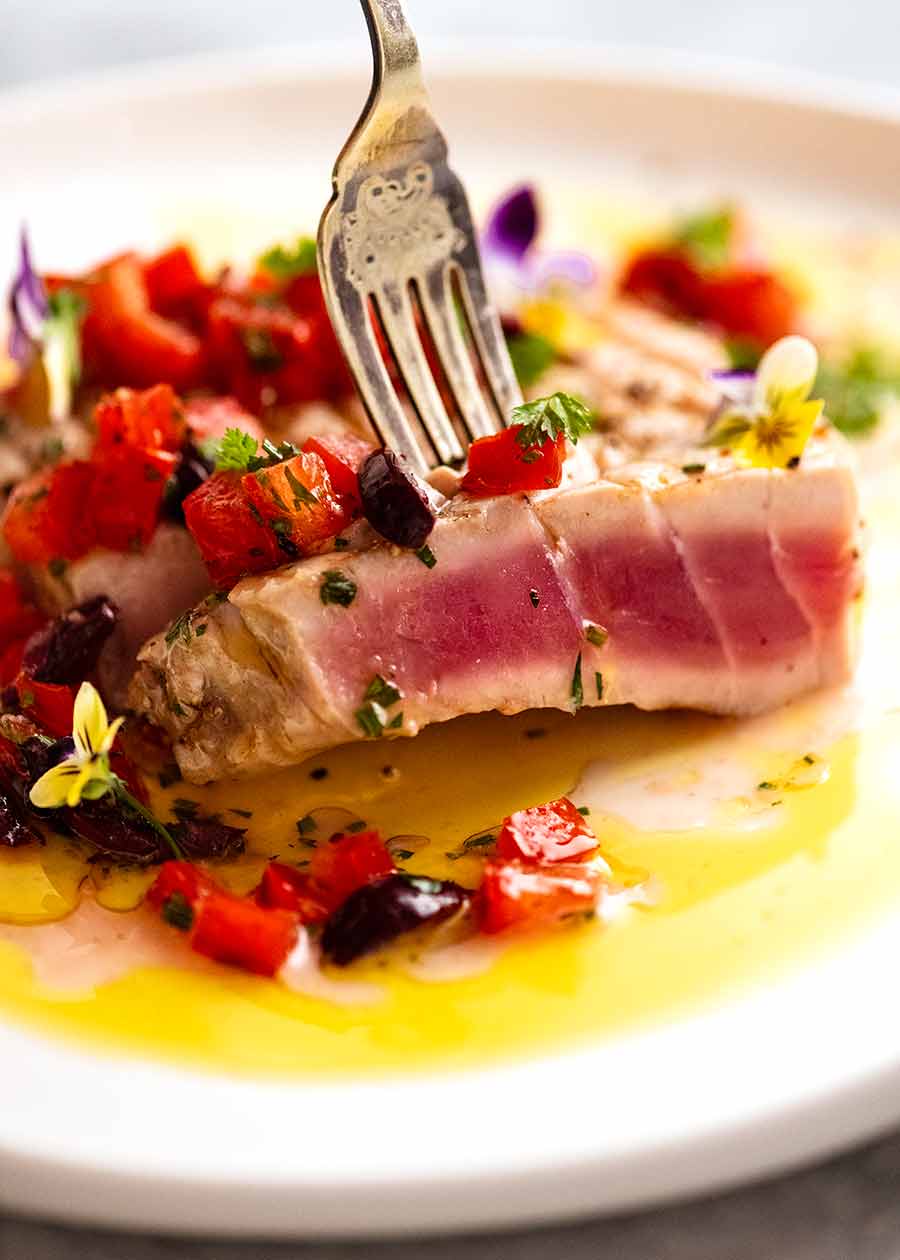
Close up of fork picking up a slice of tuna steak

The perfect Tuna Steak is seared on the outside and deliciously rare on the inside. Cooked in 2 1/2 minutes flat – possibly the fastest fish recipe ever! I’m serving this tuna with a vibrant and fresh Sauce Vierge, a light French sauce that’s a modern classic for all the right reasons.

Healthy, quick, easy – and makes for stunning presentation. This fish recipe ticks all the boxes!
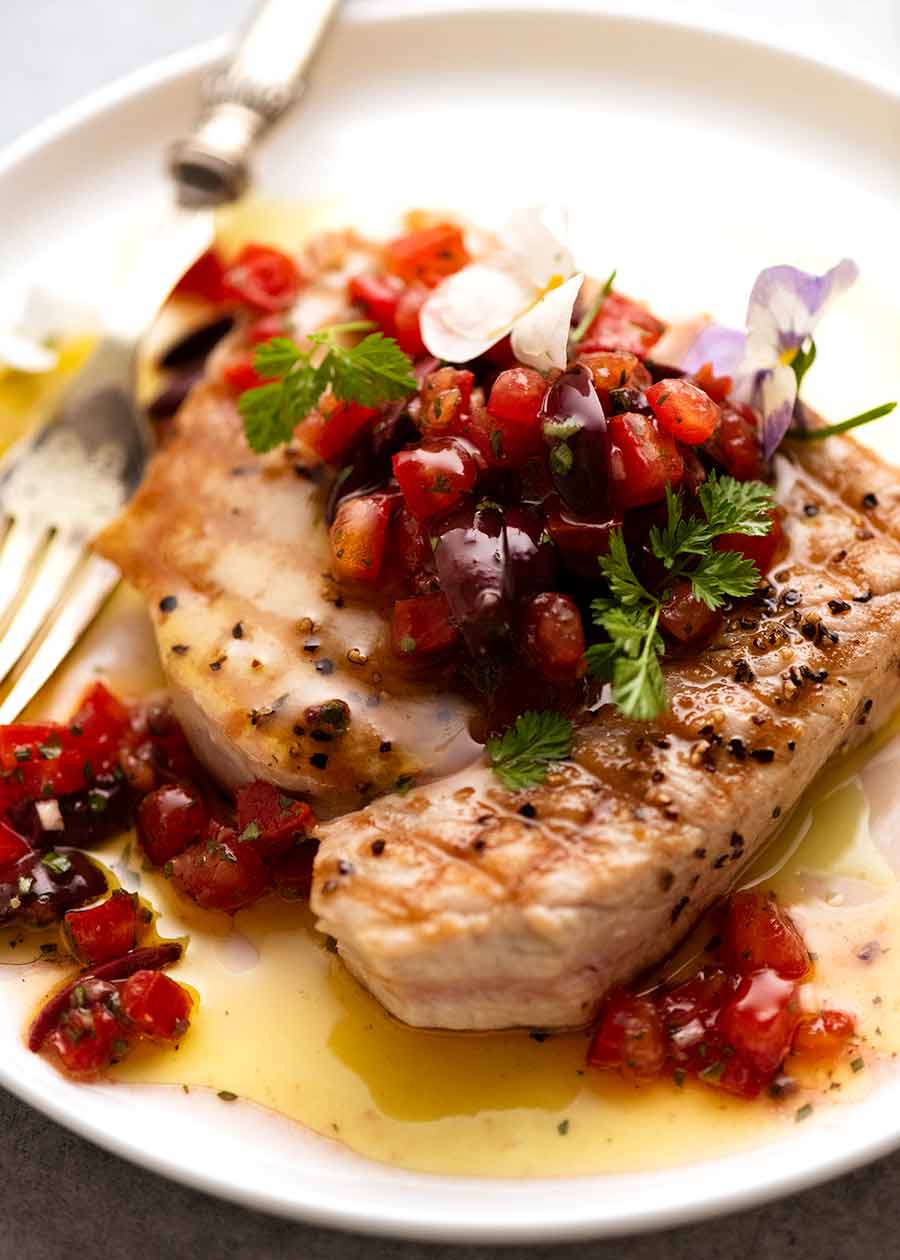
Close up of fork picking up a slice of tuna steak
Tuna Steak with Sauce Vierge (French Salsa for fish) on a plate, ready to be eaten

Tuna Steak

There’s a reason why tuna is so highly prized by the most elite restaurants around the world. The belly is sought after for its rich and fatty flesh, while the loins – which we’re using today – have a silky texture and a savoury, clean flavour that isn’t at all “fishy”. The jewel-like hue of the loin meat meanwhile is beautiful and the basis for many a stunning-looking dish.

You’ll often see tuna loin used raw for delicate canapés and starters such as tataki, carpaccio, tartare and ceviche, to name a few. The belly meanwhile is coveted especially for sashimi. Tuna is the star of the world-famous daily tuna auction at the Tokyo fish markets, where whole tuna can sell for mind-boggling prices. (The first bluefin tuna of the season is especially known for drawing outrageous bids for the publicity, and the current record stands at over $3 million for a 278 kg (612 lb) tuna – that’s over $10,000 / kg!!! 😳😳😳)

Such is the appeal and demand for quality tuna today. But ordinary folk like you and me don’t need to pay crazy prices for tuna for our purposes today!! Good quality, fresh tuna steaks are readily available from your local fish monger and are just fine!!
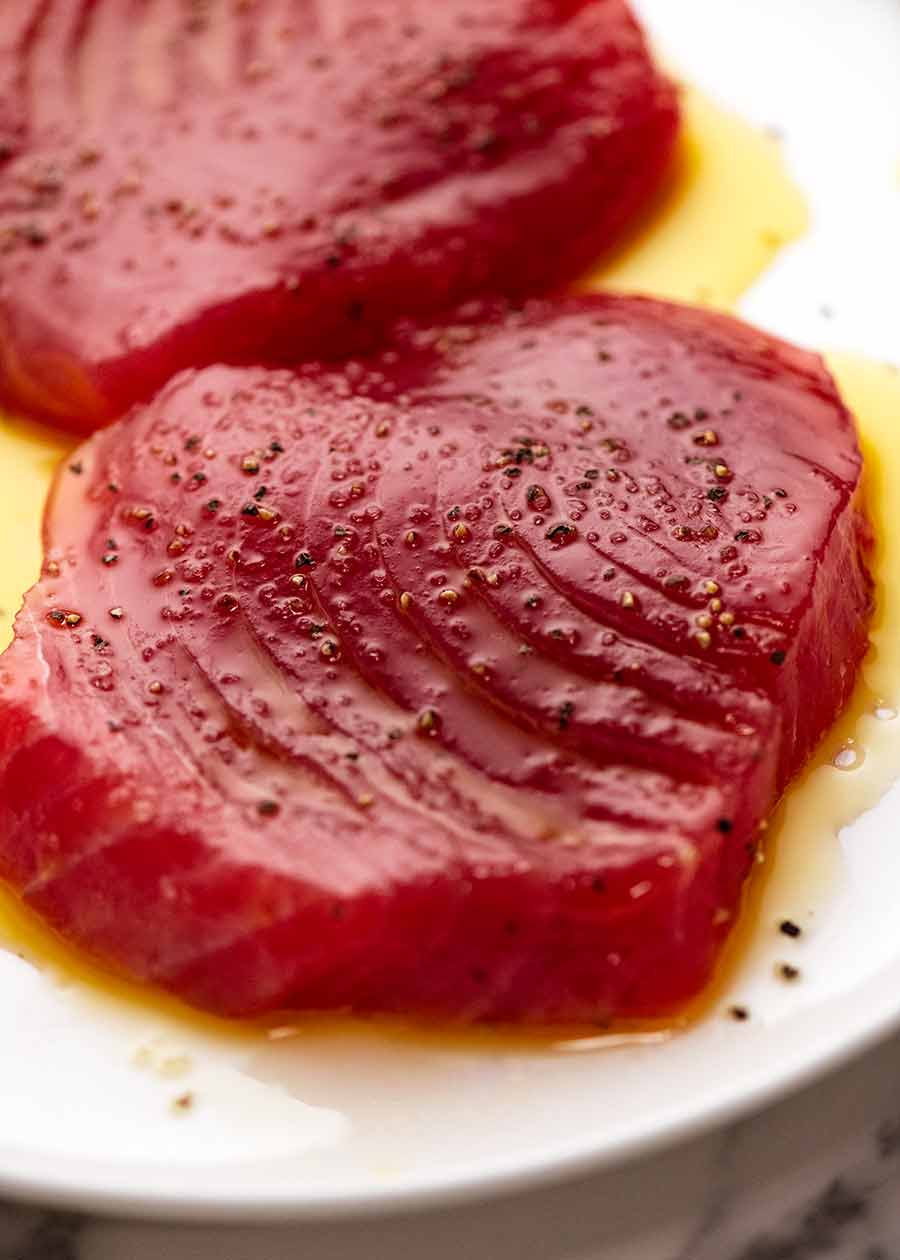
Tuna Steak seasoned, ready for cooking
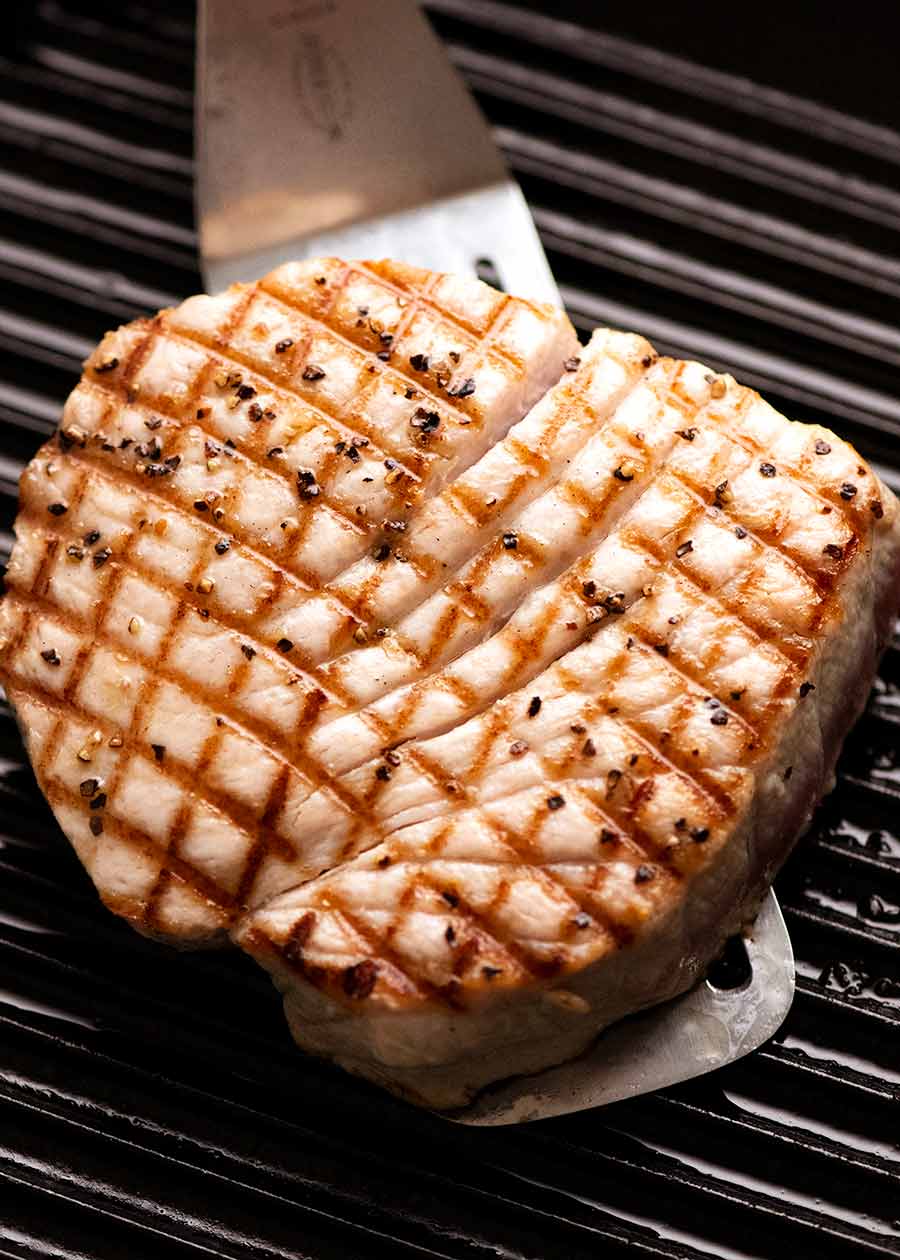
Pan seared Tuna Steak in a skillet

Should tuna steak be raw in the middle? Yes!

If you’re wondering if tuna steak should be raw in the middle, the short answer is YES. A properly cooked tuna steak should be seared on the outside but raw on the inside.

This is because tuna steaks are cut from the loin of the fish. This part of the tuna, identifiable by its even, translucent pink or red colour with little fat, is lean. Once cooked, it tends to become quite dry – think of canned tuna and the texture it has. It’s a bit like overcooked chicken breast! As much as we love our canned tuna, we don’t want to eat a whole steak of that!

Serving the tuna with a rare (raw) centre ensures the inside remains tender and succulent. Tuna that is medium or well done will start to resemble our friend the canned tuna – except without the canning oil that conveniently makes up for that dryness!
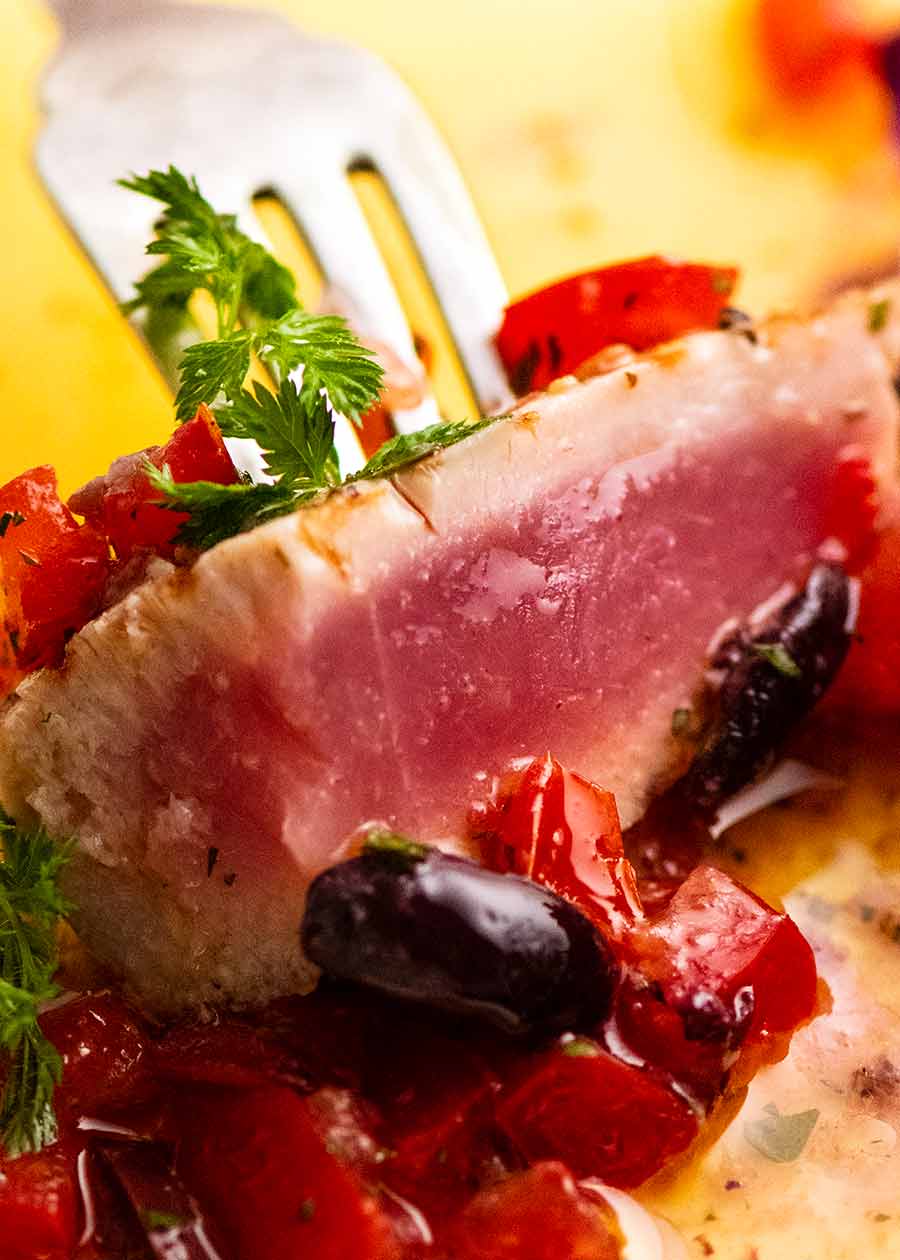
Close up of fork picking up a piece of Tuna Steak with Sauce Vierge

Different varieties of tuna

Different types of tuna have different qualities and culinary uses. Pictured in today’s recipe is yellowfin tuna which is the most common type of tuna sold at fish mongers here in Australia. It’s an excellent all-rounder tuna with a mild flavour, used for everything from sashimi / raw to canning.

The other main types of tuna you might come across are:

  • Skipjack tuna – Most commonly used for canned tuna, it has a stronger taste than other types;

  • Albacore tuna – Also used for canning; light coloured flesh;

  • Bluefin tuna – The most highly prized tuna for its rich flesh and eating qualities, especially by the Japanese. This is the type that sells for mind-boggling prices at the famous Tokyo tuna auctions;

  • Bigeye tuna – Another highly valued tuna, the second most expensive after bluefin tuna; and

  • Ahi tuna This is a Hawaiian name covering both yellowfin and bigeye tuna. People in the US know it for things like Poke Bowls.


What you need to cook tuna steak

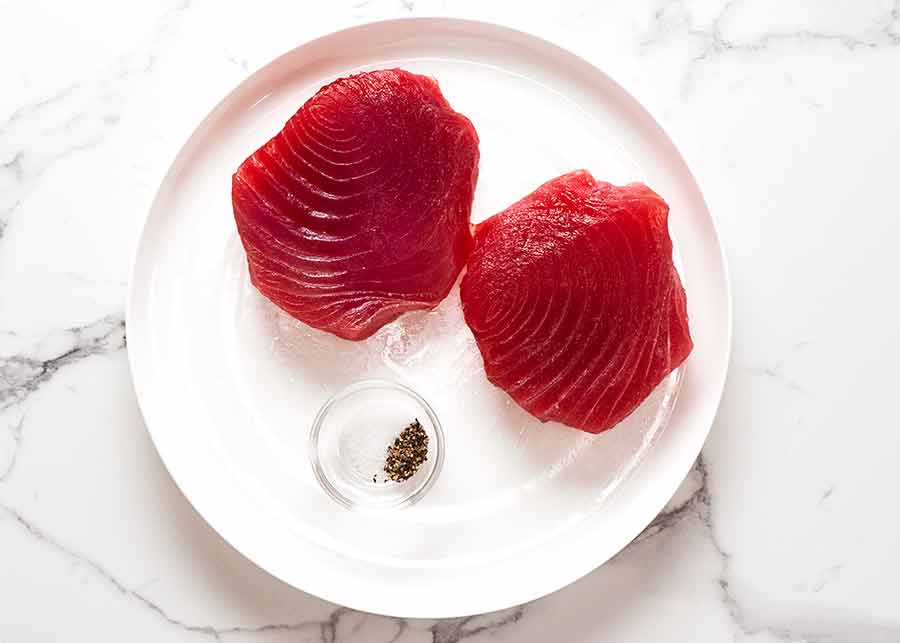
Here’s all you need to cook tuna steak: fresh tuna, salt, pepper and oil. (Let’s pretend I didn’t forget the oil in my photo, despite being one of just three ingredients! 😂)
How to cook Tuna Steak

Choosing tuna steaks

Because tuna steak is best served rare inside, it’s important to ensure the tuna is fresh. It doesn’t need to be “sashimi-grade”, which is the quality required when serving the tuna entirely raw, such as with Poke Bowls, Ceviche, Tartare or as sashimi and sushi (the last two recipes are on my mother’s website, RecipeTin Japan). However, it does need to be very fresh.

And it’s super-easy to tell – just smell and touch it:

How to tell tuna steak is fresh

  • Smells clean like the ocean and not “fishy”; and

  • Flesh is moist but not slimy.

Trust me, you will know as soon as you smell it if it is fresh – or not! (PS There is absolutely no shame at all in asking the fishmonger to pass the tuna over the counter so you can smell it. I personally insist on it. Fish is expensive!)


How to cook tuna steak

The trick to cooking tuna steak perfectly is a screaming hot skillet so you can sear the outside nicely while keeping the inside raw. It has to be super-hot because it’s only on the stove for 2 1/2 minutes!
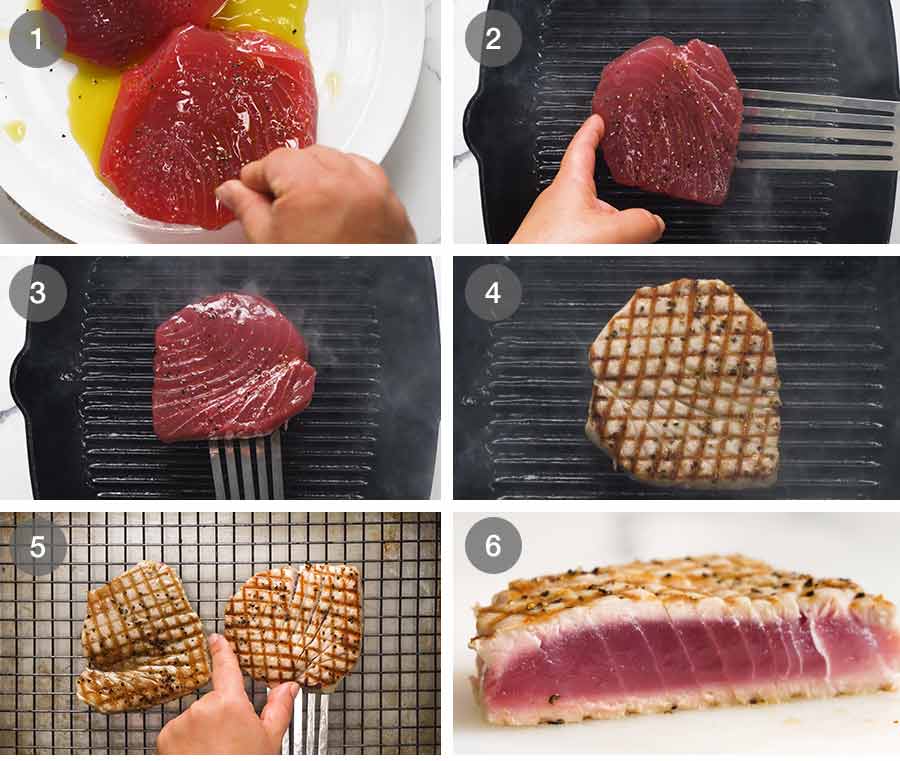
How to make Tuna Steak
  1. Oil and season steaks – Rub oil on the tuna steak then sprinkle with salt and pepper. I like to use olive oil because it has a bit of flavour, but any oil is fine here;

  2. Preheat skillet until smoking hot – Use a heavy-based skillet so it can be preheated until it’s so hot that you see smoke coming from the pan.

    TIPS:
    Do not use a non-stick fry pan. These are not made for high heat cooking and you will ruin the non-stick coating;
    Do not oil the skillet before preheating. It will smoke out your house! If it’s a well-seasoned* cast iron pan or grill pan, as I have used, then there’s no need to add oil into the skillet because we’ve oiled the tuna;
    – If you need to oil a skillet (ie. if yours is not a cast iron skillet), wait until it is super-hot then lightly brush with oil. Use either a heat-proof basting brush, paper towel lightly dipped in oil, OR take it off the heat then spray lightly with oil. Never spray a screaming hot skillet with oil ON a gas stove if you value your eyebrows and your house – it’s a fire hazard!!
    * A seasoned pan is cast iron or carbon steel pan that has developed a natural non-stick patina through repeated use. It should also be kept lightly oiled to stop it from rusting;

  3. Cook tuna – Once the skillet is very hot, place tuna in the skillet.

    How long to cook tuna: A 2.5cm / 1″ thick, 200g / 7oz tuna steak should be cooked for 90 seconds on the first side then 60 seconds on the other side to get a nice sear on the outside while keeping it rare on the inside.
    Target internal temperature: The target internal temperature is 48°C (118°F). This will ensure the inside is still rare and pleasantly warm rather than stone cold;

  4. How to get the criss-cross grill marks – If you want to get the fancy restaurant-style grill marks:

    a) Use a cast iron grill pan – Use a cast iron skillet with grill Iines, like that pictured in post;
    b) Cook 45 seconds Place tuna in skillet for 45 seconds;
    c) Turn 45 degrees, cook another 45 seconds – Turn the tuna 45 degrees and leave for another 45 seconds. Then flip the tuna;
    d) 60 seconds other side – Cook tuna steak on second side for 60 seconds, then remove to a rack;

    You will notice this means the criss-cross is applied to only one side. This is to simplify the cooking. Serve the criss-cross side facing up, obviously!

    Tip: For the most perfect lines, do not move the tuna once placed in the skillet (except to rotate the one time)!

  5. Rest on rack – Ordinarily, we want meats to continue cooking as they rest. This is sometimes called “carry over cooking”. In this case, we want to minimise it because we want the tuna steak to remain rare inside! So I like to use a rack set over a tray to rest tuna steak, to encourage excess heat to dissipate. You rarely see me do this, I normally just use a plate (save washing up and all that jazz!) So the fact that I’m doing it tells you that it matters!

  6. Slice up and admire! Let the tuna rest for 5 minutes until cool. The cooler the tuna, the easier it is to slice so the seared crust sets and is less likely to crumble when you cut it. It’s actually better served at room temperature since the middle of the tuna only gets to 48°C/118°F which is rare (barely above raw). If you serve it hot, the temperature difference between the outside and inside can seem jarring when you eat.

    Slicing to serve is optional. Fine dining restaurants often choose to pre-slice tuna for presentation purposes, because the striking red colour inside looks so good!

    As for what to serve with Tuna Steak? It’s pictured in this post with Sauce Vierge, a kind of French salsa / vinaigrette. This light and bright sauce goes perfectly with fine and fresh-tasting tuna steak. See below for a list of more Tuna Steak sauces and topping ideas!

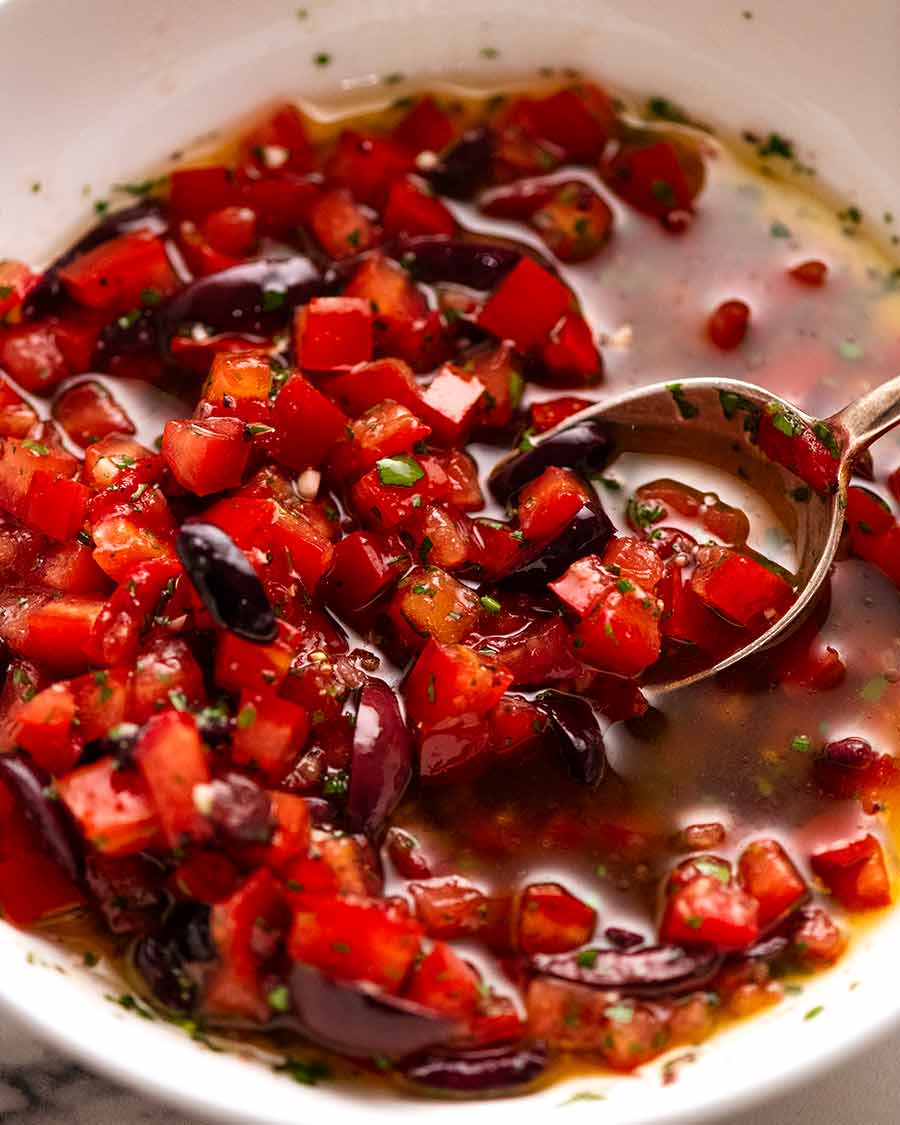
Sauce Vierge in a bowl
Tuna Steak with Sauce Vierge (French Salsa for fish) on a plate, ready to be eaten

Best sauces and toppings for Tuna Steak

Being a relatively mild flavoured fish, tuna lends itself for all sorts of possibilities when it comes to a sauce. Bright and fresh sauces and accompaniments work best with this tuna, rather than very buttery or creamy type sauces (like this Lemon Cream Sauce for Fish).

Here are some suggestions:

  • Sauce Vierge – Pictured in the post, this is a summery French salsa / vinaigrette popularised by the great French chef, Michel Guérard. He is known for introducing a lighter style of French food emphasising simplicity and freshness, influences we still see in restaurants today. This sauce pair beautifully with tuna;

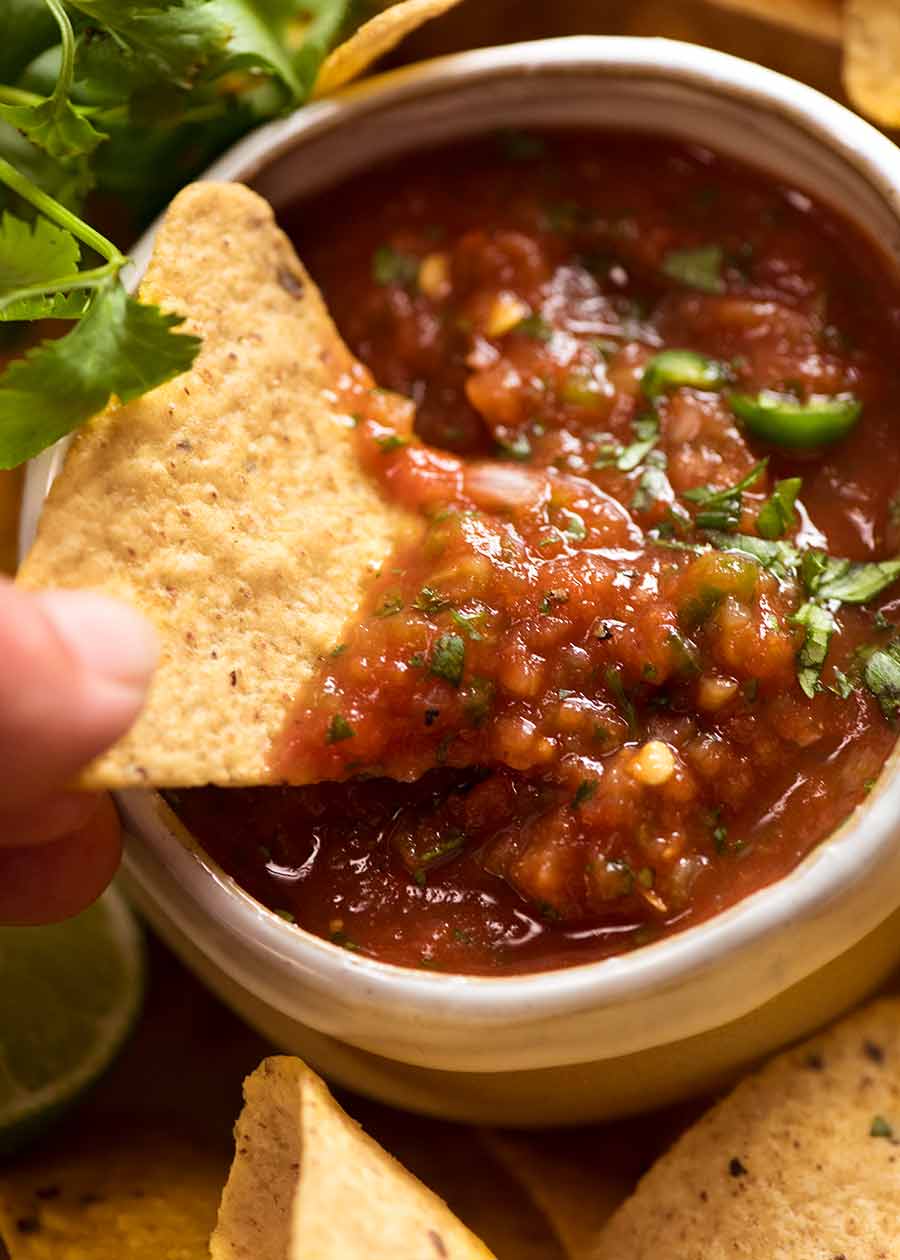
  • Mexican salsa – The bright, jumping flavours of a Mexican tomato salsa would also be wonderful with tuna! Casually dollop it over like I’ve done with the Sauce Vierge. Pico de Gallo would also work, though I’d recommend chopping the tomato a little smaller;

  • Salsa Verde – Beautiful, fresh herbs in this simple, no-cook, pesto-like sauce make this ideal for tuna and all types of seafood, not mention its gorgeous dazzling green colour!

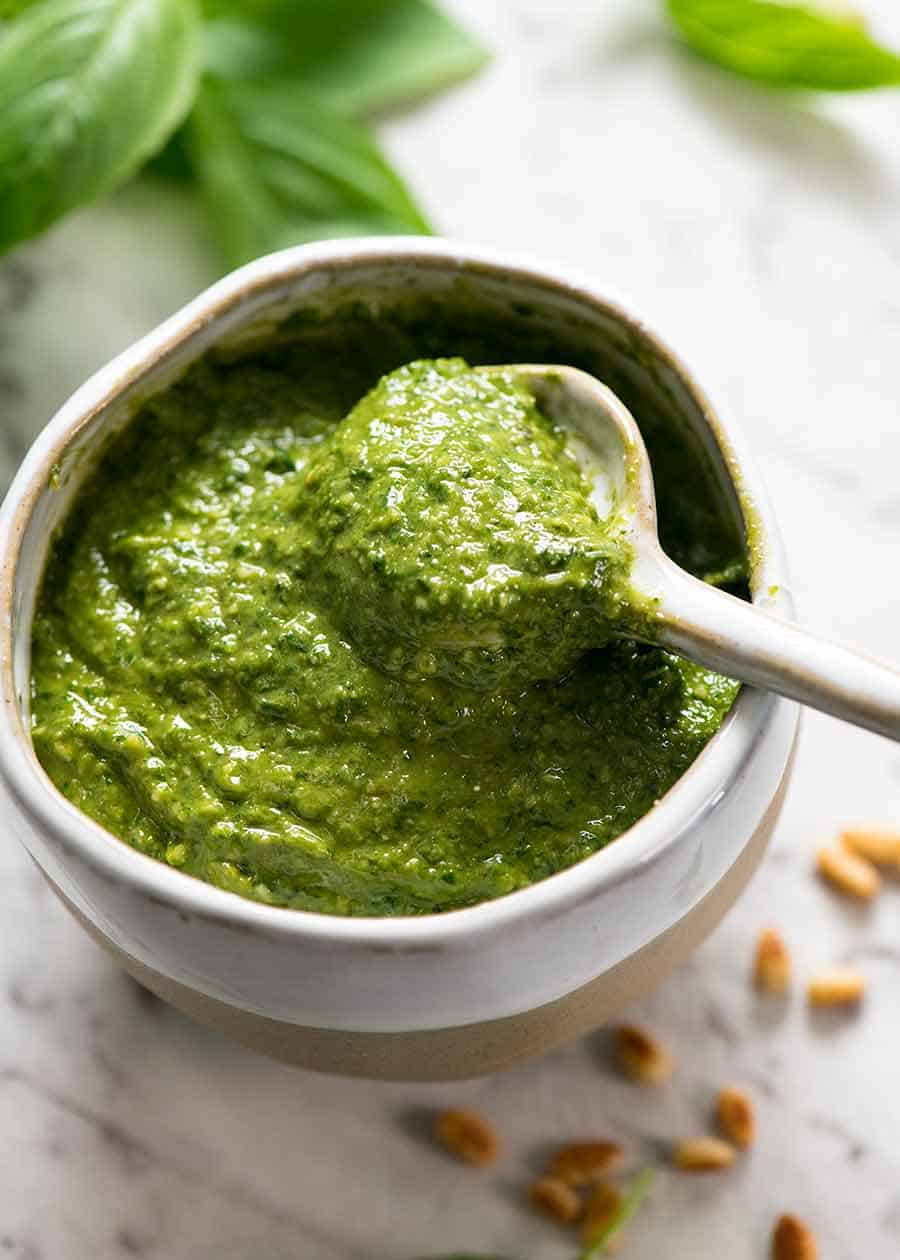
  • Pesto – A smear of basil pesto on the side would be terrific. You won’t need much because the flavour of pesto is more intense than, say, Salsa Verde;

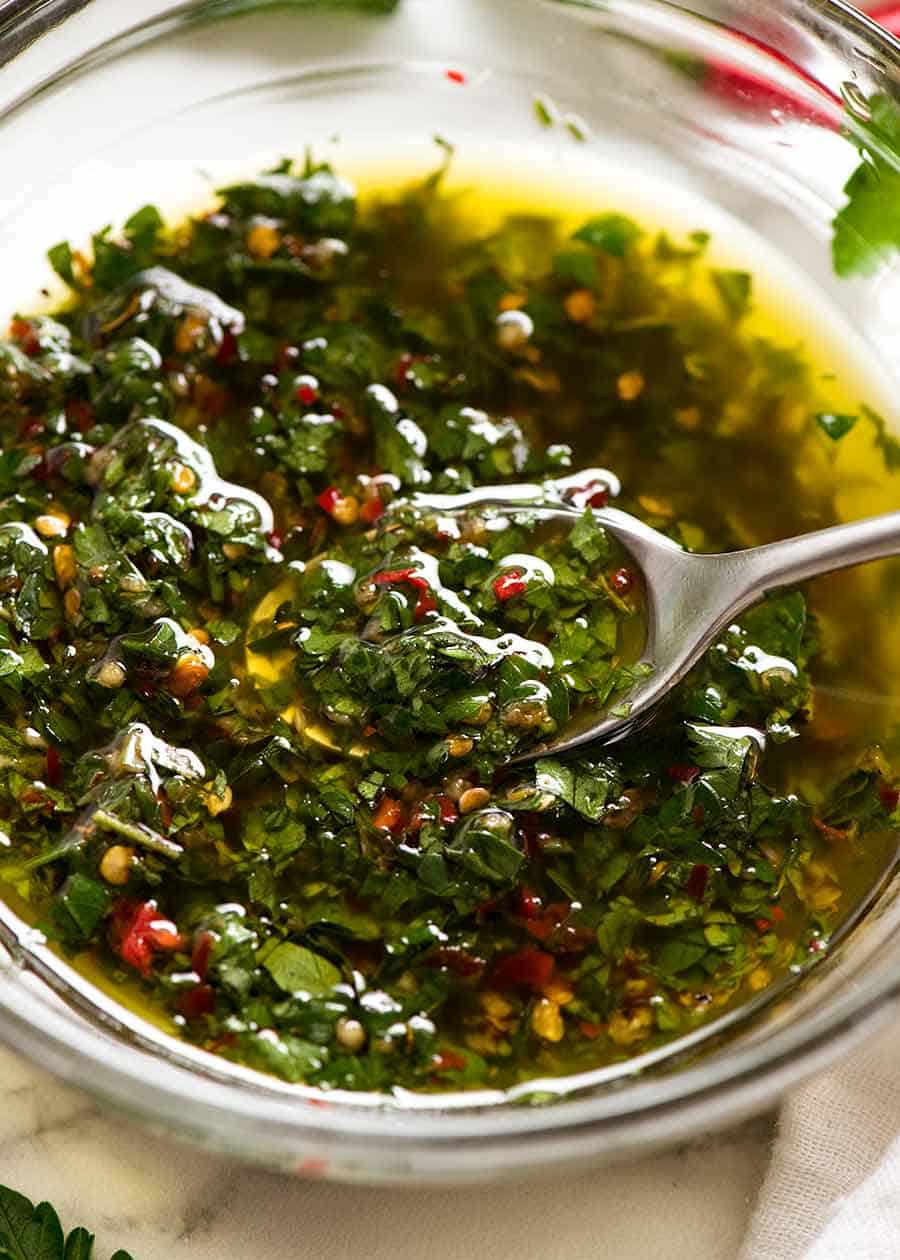
  • Chimichurri Sauce – South America’s contribution to the world of zingy, meat-friendly sauces, this parsley-garlic-olive oil sauce is a great choice for tuna;

  • Japanese Ginger Sauce – If you’re looking for a Japanese bent, use the marinade/sauce in my Tuna Poke Bowl recipe. It’s fabulous!

  • Lemon Vinaigrette – The zippy taste of lemon is a natural pairing with any fish! Using a vinaigrette (ie. salad dressing) instead of plain lemon juice. The oil and other flavours adds some richness and extra taste. It also makes the dressing more viscous so it clings to the tuna better. Use the dressing in this Brown Rice Salad recipe.

There’s just a few ideas to get you started! 😉

Sides to serve with Tuna Steak

As for sides, it really depends which way you go with the flavours. Generally I’d opt for lighter sides to keep with the fresh vibe of the tuna and sauces. Here are some suggestions:


Scrolling back through everything I’ve written, this seems like an unusually long post for a recipe that supposedly takes 2 1/2 minute flat to cook! 😂

Truthfully, I just want you to feel confident when you decide to try this recipe. So I have walked through all the information I thought you might want to know, even if you’ve never cooked tuna steak before.

I hope you find it useful, and more importantly that it looks so delicious that you can’t resist giving it a go! Remember, tuna steak is:

✔ Healthy – Low fat, low calories, high protein, and contains essential amino acids
✔ A unique and delicious fish
✔ Fine dining-worthy, but still affordable and can be done at home!

– Nagi x


Watch how to make it

Print

Tuna Steak

Recipe video above. The perfect tuna steak is seared on the outside and deliciously rare on the inside. It takes 2 1/2 minutes flat – fastest fish recipe ever! Tuna loin is lean so best served raw or rare if cooked, to enjoy the tender, almost creamy flesh. There's a reason why tuna is a darling of the fine dining scene!
Best served just slightly warm or at room temperature. Pictured with Sauce Vierge, a summery, simple French salsa / vinaigerette sauce that pairs perfectly with fish!
Course Main
Cuisine Universal, Western
Keyword how to cook tuna, tuna loin, tuna steak
Prep Time 5 minutes
Cook Time 3 minutes
Servings 2
Calories 208cal
Author Nagi

Ingredients

  • 2 x 180 – 200g (6.5 – 7oz) tuna (skinless, boneless). 2.5-3cm / 1-1.2" thick (Note 1)
  • 1 tsp olive oil
  • 1/4 tsp sea salt
  • 1/8 tsp black pepper

Cooking:

  • 2 tsp olive oil , or oil spray

Serving suggestion (Note 2):

  • Sauce Vierge (French salsa / vinaigrette for fish)
  • Chervil sprigs (substitute small flat leaf or curly parsley leaves) or small edible flowers (optional)

Instructions

  • Prepare resting tray: Place a rack on a tray. (Note 3)
  • Oil and season tuna: Drizzle half the oil over the tuna. Smear over one side, then sprinkle with half the salt and pepper. Flip and repeat.
  • Heat skillet: Heat skillet (preferably a skillet with grille lines) over high heat until smoking hot. The hotter, the better!
  • Oil skillet (if required): If your skillet is not well-seasoned, brush skillet with olive oil or take pan off stove and spray with any oil (SAFETY WARNING! Note 4)
  • Cook first side: Place tuna steak in the skillet (I do one at a time for best results, Note 5) and cook for 45 seconds.
  • Rotate for grill lines: Turn steak 45 degree. Continue cooking another 45 seconds.
  • Cook other side: Flip tuna carefully, then leave for 1 minute or until the internal temperature in the middle reads 48°C / 118°F (Note 6).
  • Rest: Remove tuna from skillet and place on rack. Rest for 5 minutes – it will cool down almost to room temperature. This is desirable for easier slicing and better eating (Note 7) Serve!

Plating up – with Sauce Vierge (pictured):

  • Slice, if desired (Note 7): Place tuna on a board with criss-crossing grill lines facing up. Slice the tuna into 4 or 5 thick slices. Transfer to serving plate and separate the slices slightly so they insides are just visible.
  • Sauce Vierge: Spoon the Sauce Vierge over steaks, leaving small piles of tomato here and there on the tuna slices, and a few on the plate. Other sauce options: See Note 2.
  • Finishing: Drizzle with a bit of olive oil. It looks beautiful as it is, but if you want to raise the bar even higher, add a few small sprigs of chervil and some edible flowers!

Notes

1. Tuna:
  • Buying – Tuna comes cut into steaks, rather than thin fillets you traditionally see with white fish
  • It is almost always sold skinless and boneless
  • A meat thermometer highly recommended – Tuna can go from perfectly rare inside to medium in the space of 30 seconds so the use of a meat thermometer is highly recommended.
  • Steak size and cook times – The cook times specified in this recipe are for a 180g (6.5oz) tuna steak that is 2.5cm (1″) thick.
  • Thickness of tuna steak also plays a big part in cook time.
2. Serving – Pictured in post with Sauce Vierge, a classic French salsa / vinaigrette which is particularly good with fish. Other ideas:
  • Mexican salsa – The bright flavours of a Mexican tomato salsa would be wonderful with tuna! Casually dollop it over;
  • Pico de Gallo – Chopping the tomato a little smaller;
  • Salsa Verde – A beautiful, fresh herb taste and gorgeous dazzling green colour!
  • Pesto – A smear of basil pesto on the side would be terrific. Use sparingly as its strong;
  • Chimichurri Sauce – This South American parsley-garlic-olive oil sauce is a great choice for tuna;
  • Japanese Ginger Sauce – Use the marinade/sauce in my Tuna Poke Bowl recipe. It’s fabulous!
  • Lemon Vinaigrette – Any vinaigrette is a natural pairing with any fish! Try the dressing in this Brown Rice Salad recipe. You can also optionally gently warm a vinaigrette for serving.
3. Rack on tray – I normally don’t insist on a rack (normally I just use a plate) but for tuna steaks I do, because air circulating under the steak means the tuna retains less heat. This discourages “carry over cooking” to minimise the danger of the tuna overcooking while resting.
4. Oiling pan – It is best to heat the skillet without oil because it will otherwise smoke terribly.
If your pan is not well-seasoned, you can brush the pan with oil along with the fish. Only brush with oil once already hot.
If you brush the hot pan, you need to ensure you have a heat-proof brush. Otherwise, take the pan off the stove and spray with oil (never spray a skillet over a lit gas stove –  the oil can catch fire easily).
5. Cook one steak at a time – Tuna can go from rare to medium in 30 seconds, so even handling two tuna steaks can be tricky when you are seeking “perfection”! So I cook one tuna at a time when I want to ensure it cooks perfectly inside, and also when I want (near!-) perfect grill lines. It takes 2 1/2 minutes to cook and the inside is rare anyway, so it’s fine to do them one at a time.
6. Doneness of tuna – It is uncommon to see tuna steaks cooked any more than rare inside because it’s such lean meat. It tends to be quite dry if it’s anything beyond medium rare.
7. Slicing and serving – This is optional. It makes for nice presentation and is a way restaurants plate up tuna steak nicely. It also makes it easier to eat.
It’s easiest to slice when the outside of the tuna has cooled otherwise it is prone to crumbling.
TIP: Hold the edges of the tuna together when slicing, to avoid the cooked part from breaking.
Best served at a tepid temperature. If you serve it hot, the temperature difference between the outside and inside can seem jarring when you eat.
8. Nutrition per tuna steak, tuna only, ie. no sauce.

Nutrition

Calories: 208cal | Carbohydrates: 1g | Protein: 35g | Fat: 8g | Saturated Fat: 1g | Trans Fat: 1g | Cholesterol: 65mg | Sodium: 735mg | Potassium: 324mg | Fiber: 1g | Vitamin A: 103IU | Calcium: 31mg | Iron: 3mg

Life of Dozer

Doggie paddle race!! Guess who won??

Nagi Dozer swimming Bayview

The post Tuna Steak appeared first on RecipeTin Eats.

Sauce Vierge

Posted: 02 May 2021 11:03 PM PDT

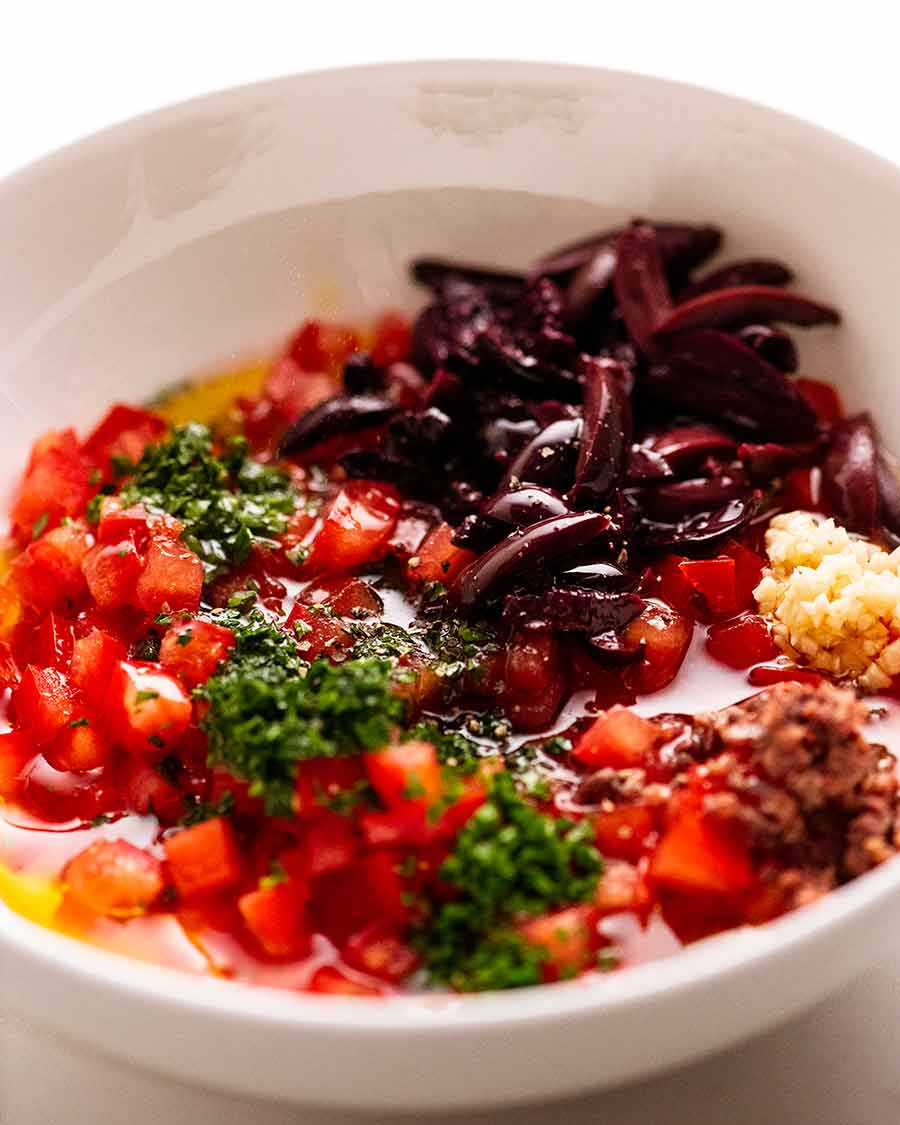
Sauce Vierge ingredients in a bowl

Sauce Vierge is a French modern classic. It’s a wonderfully fresh, vinaigrette-style sauce that’s particularly great with seafood. I featured and paired this elegant sauce with my Tuna Steak recipe.

Its use doesn’t end with seafood though! Also serve it with chicken, pork or vegetables. You could also use as a salsa dip, or pile it on toasted bread to make simple bruschetta or crostini. Try it also over a omelette or frittata, or corn fritters! Even twirl pasta through it!

Sauce Vierge ingredients in a bowl

Sauce Vierge – a classic sauce for fish!

I featured Sauce Vierge in my Tuna Steak recipe which I also published today. However this is such a terrifically versatile sauce that I decided to publish it separately so you can explore the fullest extent of its possibilities!

What is Sauce Vierge?

Sauce Vierge is a French sauce made from finely diced tomatoes, olive oil, fresh herbs and a touch of lemon juice for freshness. It’s a no-cook sauce, sort of like a salsa, and is light and summery in both taste and appearance. Sauce Vierge translates to “Virgin Sauce”, I guess a reference to the clean and pure character of the sauce? 😉

Sauce Vierge was popularised by Michel Guérard, a French chef who championed a new style of French food in the 1970’s called nouvelle cuisine (literally, “new cuisine”). This movement resisted the classical traditions of French cooking, instead emphasising freshness, simplicity, and lighter treatments that flattered ingredients. This extended to the visual with greater attention given to colour, naturalism and elegant presentations compared to traditional haute cuisine. Really, this sauce couldn’t be a better expression of this new school of French food thought!
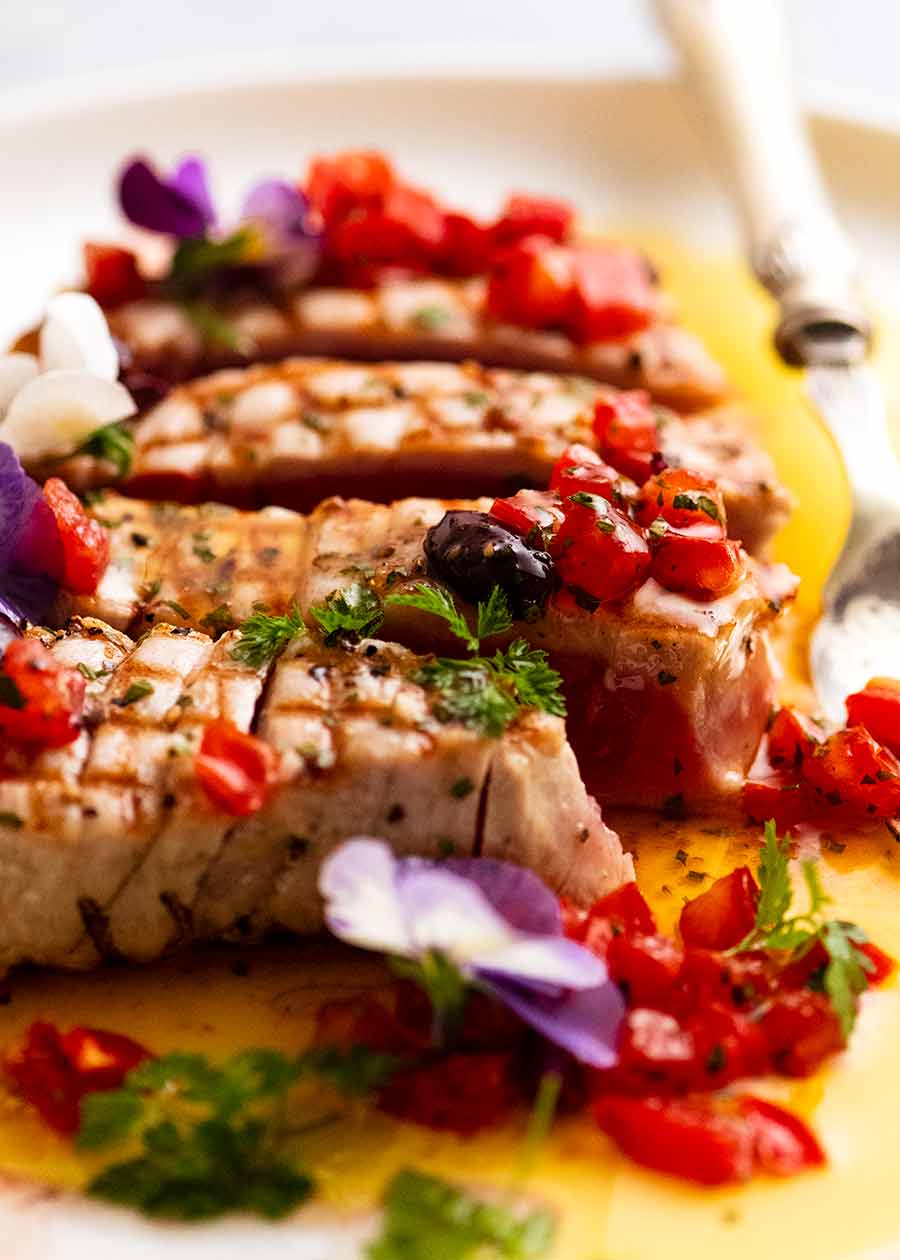
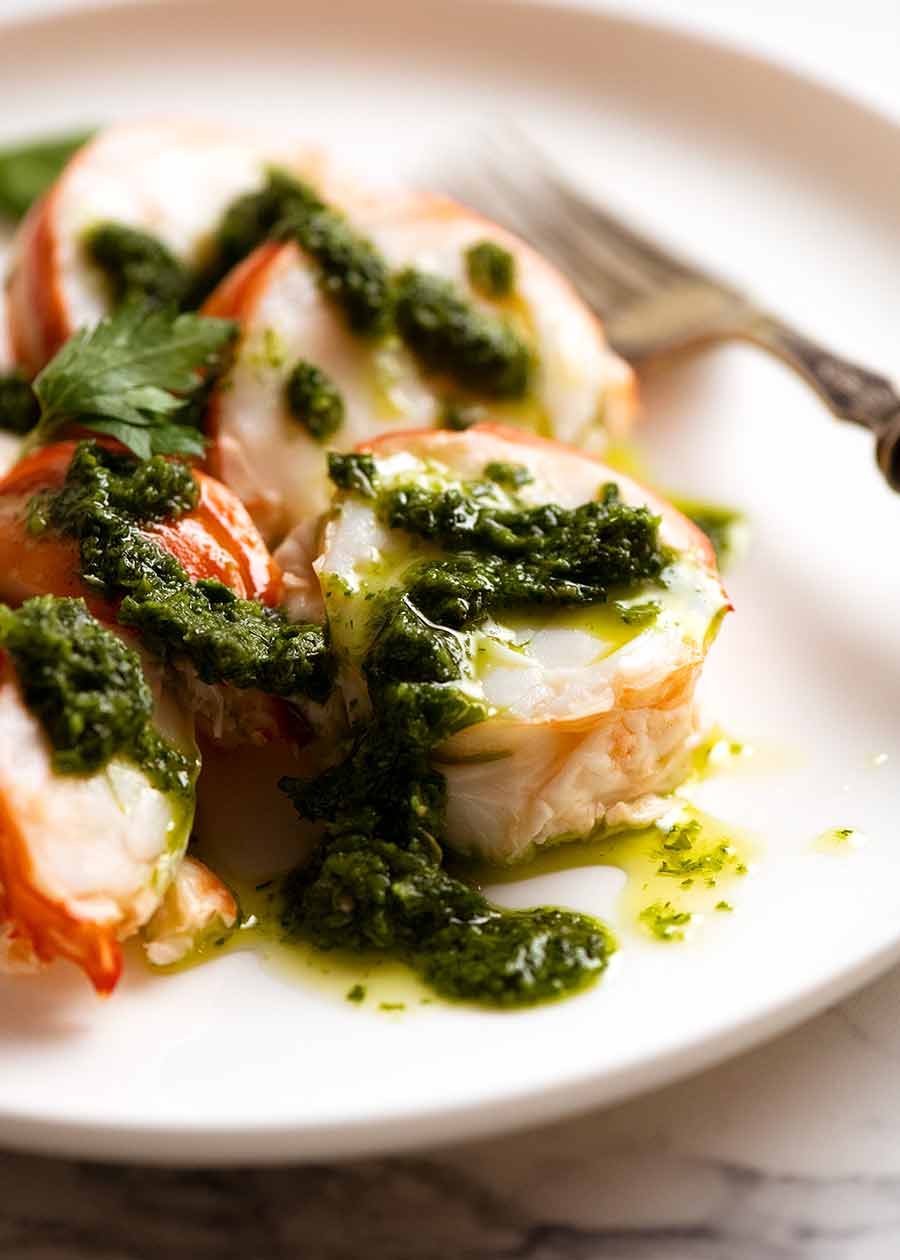
Tuna Steak with Sauce Vierge, ready to be served
The fresh summery flavour of Sauce Vierge makes it perfect to serve with Tuna Steak!

What Sauce Vierge tastes like

It’s essentially a salsa, with summery Mediterranean ingredients and flavours. It gets a hit of complexity and depth with the addition of anchovy fillets and a mix of fresh herbs. Richness and body comes from the extra virgin olive oil. For such a simple sauce, try to use the best oil you can afford for the best flavour!
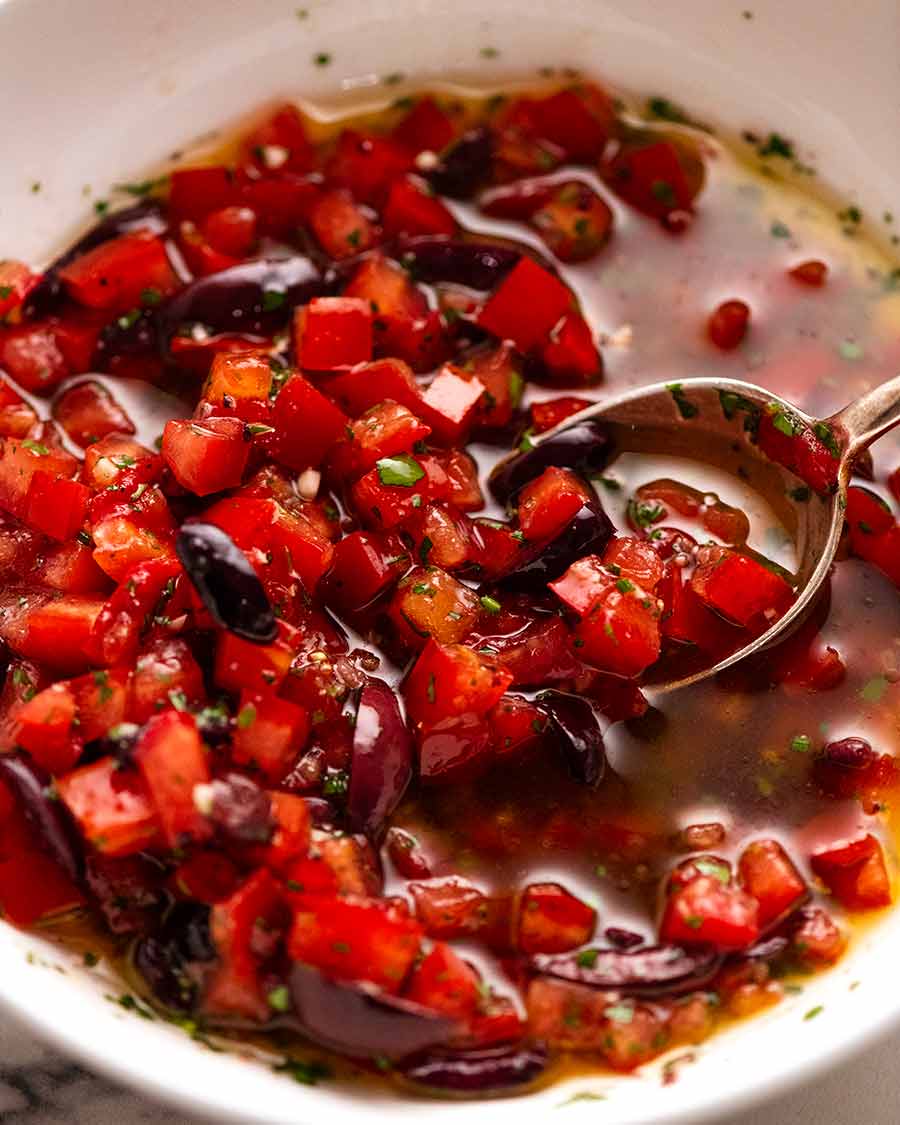
Sauce Vierge in a bowl, ready to be mixed

What goes in Sauce Vierge

There are all sorts of versions around, but essentially the core ingredients in it are fresh tomato, olive oil and fresh herbs along with a touch of acidity, usually from lemon.

This version I’m sharing today is pretty classic, with a lovely mix of fresh herbs. I also add olives and anchovies for a little extra umami and depth which makes this sauce even more versatile.
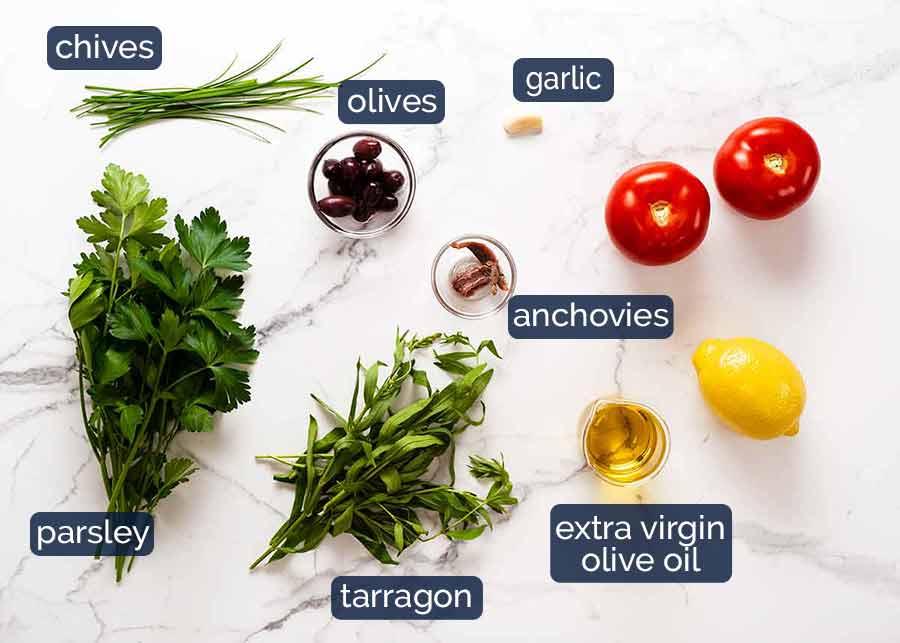
Sauce Vierge ingredients
  • Tomatoes – They’ve got to be ripe and juicy! They are a key ingredient here so make sure they’re good ones;

  • Anchovies – Though perhaps not strictly traditional, this is a key ingredient in mine that gives this otherwise simple sauce a terrific depth of flavour and natural savouriness. Without it, some people would probably consider this sauce a bit plain, or missing “something”. It’s the main salt in this dish. It does not taste fishy at all. In fact, you can’t even tell it’s in there and more adds what the French would call a little je ne sais quoi !

    Can’t do anchovy?? Use one of the following substitutions:
    – Best alternative: 1/2 tsp fish sauce + pinch of extra salt (leave Sauce Vierge for 20 minutes to let flavour meld)
    – Other option: 1/4 tsp Worcestershire + extra salt (non-fish substitute)

  • Fresh herbs – Herbs add freshness, flavour and colour. I like a combination of herbs to add interest. Parsley, chives and tarragon I find is a beautiful mix. (Other herbs that would work well include basil and chervil.) If you don’t have all 3, use just parsley, or half parsley and half tarragon;

  • Olives – Like anchovies, olives are perhaps not strictly traditional but bring this sauce an extra dimension that makes it all the more versatile. Lovely little pops of salty juicy goodness, the olives give this sauce a more distinctly Mediterranean feel and flavour for me, as well as adding striking glistening pops of black throughout the red;

  • Garlic – Just a hint, not too much;

  • Lemon juice – The fresh tang in the sauce. If you don’t have lemons, use white or red wine vinegar instead. There are versions of Sauce Vierge that opt for vinegar, but I love the fresh flavour of lemon; and

  • Extra virgin olive oil – Use the best you can afford, for the best flavour!

To make, simply combine all ingredients and mix! Sometimes Sauce Vierge is slightly warmed to serve with hot foods. To do this, gently heat the sauce in a small pot for a few minutes to just warm through and encourage the flavours to marry. Don’t boil it or you’ll lose all that wonderful freshness!
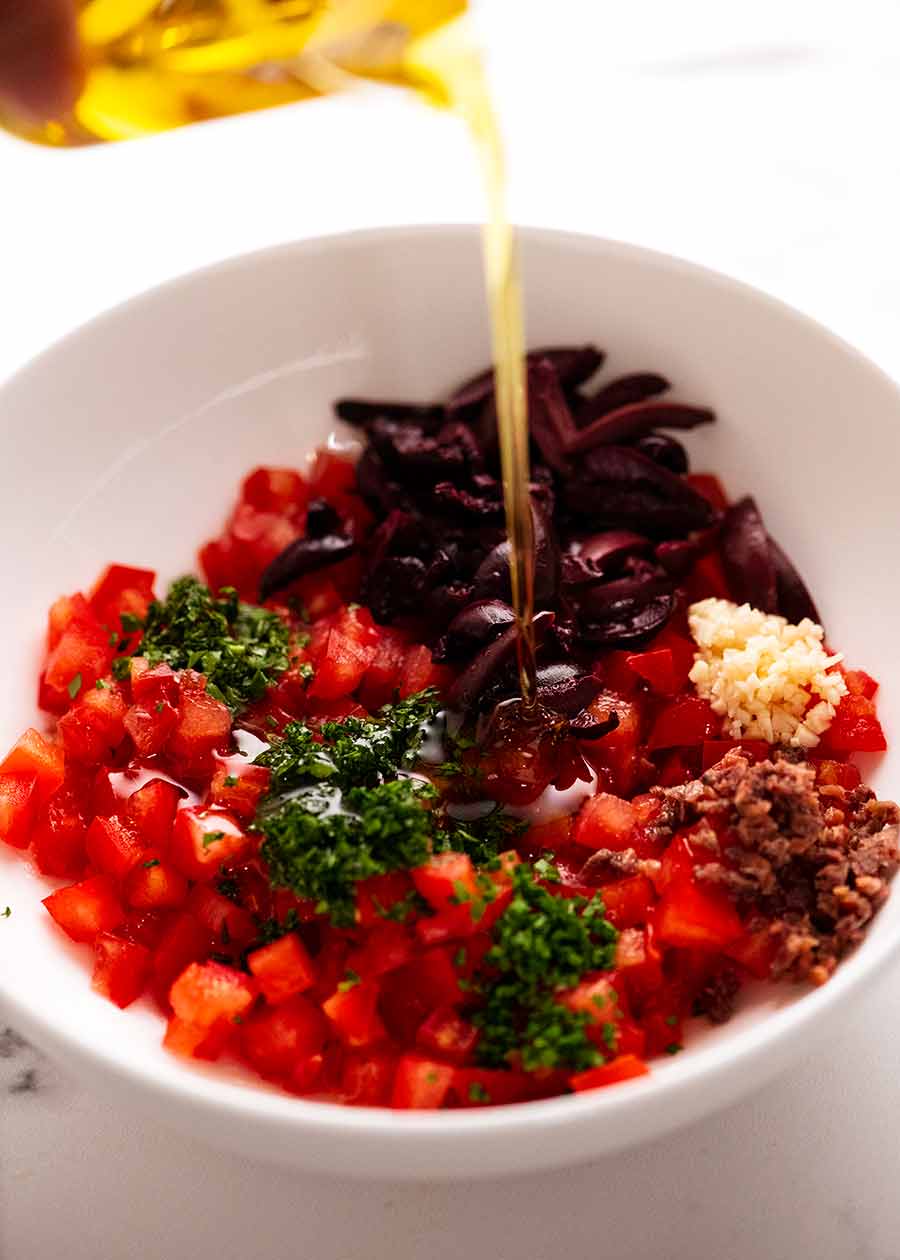
Pouring olive oil over Sauce Vierge in a bowl

What to serve with Sauce Vierge

This light and fresh, no-cook sauce is particularly good with seafood, but don’t stop there! Here are some more suggestions:

  • Fish and shellfish – Spoon it over like a salsa;

  • Chicken or pork – Pan-sear meat with just salt and pepper, then spoon over Sauce Vierge;

  • Vegetables – Great served over lightly barbecued or steamed vegetables.

  • Salsa-type dip – For scooping up with corn chips or homemade crostini!

  • Spooned over omelettes or a frittata. Or try it with an Egg White Omelette!

  • Pile onto toasted bread to make bruschetta or crostini;

  • With corn fritters! This would be 100% sensational.

  • With pasta – What the Italians would call an “uncooked” pasta sauce. Simple boil pasta, toss through the Sauce Vierge.

So there’s just a few ideas to get you started! If you make it, let me know what else you used it for – share it with everyone in the comments below! – Nagi x

PS. No video for this one because it’s a quick bonus recipe today. But if you really want one, let me know in the comments below!
Print

Sauce Vierge (fresh French sauce / salsa)

Sauce Vierge is a French sauce made from diced tomatoes, olive oil, fresh herbs and lemon juice. It pairs especially well with seafoods, such as the Tuna Steak I shared today.
Sauce Vierge was popularised by Michel Guérard, a French chef who championed nouvelle cuisine (literally, "new cuisine") in the 1970's, a food style which emphasised freshness, simplicity, and lightness. Really, this sauce couldn't be a better expression of this style of French cooking!
Serve with white meats (chicken, pork), vegetables, use as a salsa-type dip (corn chips, mini crostini), pile onto toasted bread to make bruschetta or crostini, pile over an omelette or frittata, or corn fritters! Great made on the day, even better the next day!
Course Sauce
Cuisine French
Keyword salsa, sauce vierge
Prep Time 10 minutes
Servings 4
Calories 205cal
Author Nagi

Ingredients

  • 5 1/2 tbsp extra virgin olive oil
  • 2 tbsp fresh lemon juice
  • 2 tomatoes , seeded and diced into 0.8cm (1/3") cubes (Note 1)
  • 12 black olives , pitted and cut into strips (Spanish, kalamata, or other)
  • 2 anchovy fillets , very finely minced (Note 2)
  • 1/2 tsp garlic , very finely minced
  • 1 tsp parsley , finely chopped (Note 3)
  • 1/2 tsp chives , finely chopped (Note 3)
  • 1/2 tsp tarragon leaves , finely chopped (Note 3)
  • 1/4 tsp salt
  • 1/4 tsp black pepper

Instructions

  • Mix: Mix ingredients in a bowl. Taste and add more salt if you want (depends how salty the food you are putting it on is).
  • Uses: Use at room temperature as a salsa / sauce, piled onto fish (such as Tuna Steak), other seafood, grilled or steamed vegetables, chicken, pork, over pasta, piled onto bread, or even as a dip for scooping up with crostini or corn chips! You can also warm the sauce if you wish: Gently heat in a small pot and warm to blood temperature. Do not simmer or boil or you'll lose the freshness!
  • Storage: Use immediately on making, or the next day. Keep in a very airtight container and allow to come to room temperature before serving.

Notes

1. Tomato – Halve then use a teaspoon to scrape out the watery insides and seeds. Dice finely.
2. Anchovy fillets – This gives the sauce an extra complexity and umami that makes it that much more delicious.
Substitutions:
  • 1/2 tsp fish sauce + pinch of extra salt (leave Sauce Vierge for 20 minutes to let flavour meld) – best alternative
  • 1/4 tsp Worcestershire + extra salt (non fish sub)
3. Herbs – This is a really great combination of fresh herbs that gives the sauce an elegant and fresh flavour, with the tarragon giving it a distinctly French touch. But if you don’t have them, you can use:
  • All parsley (flatlet best, curly ok too);
  • Half parsley, half chives
  • Alternatively: Basil and chervil also are great to include / substitute
Every Sauce Vierge recipe is different so don’t feel this is dogma!
4. Fish for Sauce Vierge – try:
5. Nutrition per serving, assuming 4 servings.

Nutrition

Calories: 205cal | Carbohydrates: 4g | Protein: 1g | Fat: 21g | Saturated Fat: 3g | Cholesterol: 1mg | Sodium: 338mg | Potassium: 178mg | Fiber: 1g | Sugar: 2g | Vitamin A: 580IU | Vitamin C: 12mg | Calcium: 20mg | Iron: 1mg

Life of Dozer

Just a little snack – munching on the grass at the park!

Dozer eating grass

The post Sauce Vierge appeared first on RecipeTin Eats.

No comments:

Post a Comment

guest post needed

Hi I hope you're doing well. I'm reaching out to discuss the possibility of publishing articles on your website. Along with guest ...