Evok Advertising |
| Destination Marketing in a Post-Cookie Internet: Evolving Your Marketing Strategy Posted: 12 Nov 2021 04:00 AM PST The travel and tourism industry has been rolling with the punches for the last year and a half, and now there's more trouble on the horizon. As consumers have grown more aware of how their data is used, their personal privacy has become a growing concern, causing the government to step in to regulate how online data is collected and used. In the European Union, legislation has already been passed to restrict the way companies can acquire data on consumers. It's plain to see which direction the wind is blowing, and companies have already taken steps to preempt government regulation. Major web browsers such as Safari and Mozilla Firefox have already banned the use of third-party cookies on their platforms, and now Google has announced that the same will happen on their platform by the end of 2023. This is a big deal, since Chrome accounts for over 50 percent of all web traffic in the world. 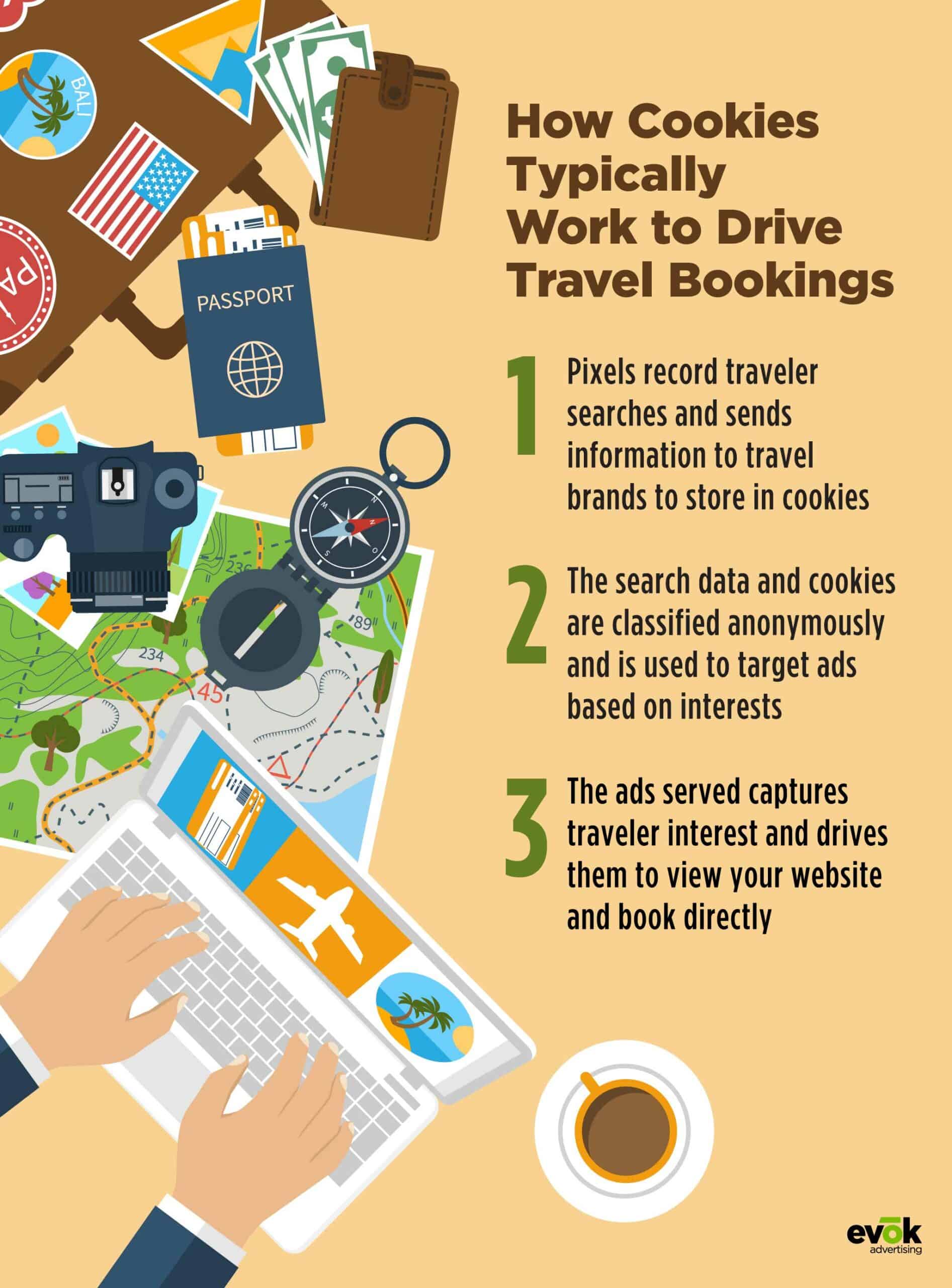 What Are Third-Party Cookies?Third-party cookies are pieces of code placed in web domains by AdTech companies that will attach themselves to a user and track their movement across the internet, allowing advertisers to target very specific target audiences with minimal effort. For example, an airline might use third-party cookies to find out if someone in their rewards program likes to visit local restaurants when they arrive at their destination. Using that information, the airline can target that person with local food promotions. How to Prepare for a Post-Cookie WorldTo start, you should take inventory on your current marketing strategy and find out exactly how much you rely on third-party cookies to conduct your own ad campaigns. Then, once you identify which campaigns rely on third-party data, you can begin the process of phasing out your third-party reliance and braving the post-cookie world. To help you come up with new marketing strategies, we're sharing several insights as marketing and advertising industry experts. Methods to Coping without Cookies First-Party CookiesFirst-Party Cookies: While Google has declared third-party cookies are soon to be persona non-grata, that doesn't mean that you'll have to stop collecting consumer data. It's still perfectly acceptable to track what consumers do when they're on your website, so long as they know you're doing it. It's first-party cookies that allow retailers like Walmart or Target to remember what items you have in your cart and give you recommended products based on those items. They also make a record of any information that a customer enters into their account, so in businesses with a large volume of customers, some form of Customer Relationship Management (CRM) system is a necessity. This means if you want people to leave information on your website or make an account on your app, then you should consider offering incentives for the customer. That can be through exclusive content, special offers, loyalty and rewards programs etc., so long as there's some reason for a potential customer to leave you their information. Contextual AdvertisingContextual Advertising: Out with the new, in with the old. Contextual advertising is a practice that's been around for a long time but has been used less since the rise of cookie technology. Now, it could be seen as a breath of new life. Contextual advertising is based on matching your ads to certain keywords. For example, let's say you're a hotel chain running a special along the lines of "stay two nights, get the third night for free." You would choose keywords like "vacation" or "trip" for your ads, and they would only appear when people enter a website with those keywords as a topic or theme. This has the potential of being more immediately relevant to a customer opposed to behavioral targeting from cookies. Walled GardensWalled Gardens: The term 'walled garden' refers to the idea that companies like Google and Facebook have a veritable garden of user data that they can use to advertise, but for anyone else trying to use the garden (such as Google Ads), you have to pay the gardener a hefty fee. Google still has access to all sorts of demographic information to help place your ads, it's just not sharing that information. Facebook, too, will place your ads in front of the audience you want to reach—for a fee. The primary difference between advertising with those two companies before and after the banishment of third-party cookies, will be that you can no longer use information from Google and Facebook across all forms of media. In other words, travel and tourism brands won't be able to use data from those two platforms in external media such as owned media channels, the open web, etc. Future TechnologiesAwait new technology: Google originally announced that all cookies on their platform would be disallowed in early 2022. This was later changed to late 2023. Why? Because Google and other companies are working on an effective alternative to third-party cookies and want to have that in place prior to the ban going into effect. Mainly to allow companies time to adjust their marketing strategy. These new technologies include the Federated Learning of Cohorts (FLoC) by Google, and Identity-Based Tracking by The Trade Desk. FLoC will gather people into cohorts based on what content they see and the things they look up, without keeping any actual information like age, sex, or location. Google promises these cohorts would update weekly to keep them relevant. Identity-Based Tracking would assign every internet user a number from a central authority and track their actions in a manner similar to third-party cookies today. It would maintain privacy by hiding any information behind that ID number. Now Is the Time to PrepareTimes change, and that's always a scary thought. But there's plenty of ways for a forward-thinking business to adapt. There's over a year of time left before the ban will go fully into effect, so now is the time to begin the change. Don't wait until 2023 to begin implementing these strategies—start now. Our team at evok would be happy to talk about helping you make the transition. The post Destination Marketing in a Post-Cookie Internet: Evolving Your Marketing Strategy first appeared on Evok Advertising. |
| 3 Effective Ways Credit Unions Can Grow Engagement on Social Media Posted: 12 Nov 2021 04:00 AM PST Social media has experienced a staggering growth rate since 2004, and it's not pumping the brakes any time soon. Credit unions that don't hop on board with the latest tactics and trends will simply find themselves buried in the dust of yesterday's sorrows. Today, it takes more than just a content calendar filled with scheduled posts to keep your followers satisfied–it takes the right posts for the right audience to keep them engaged. While some components of a solid social media strategy come from trial and error, the rest comes from knowing what content to share and how to do it right. 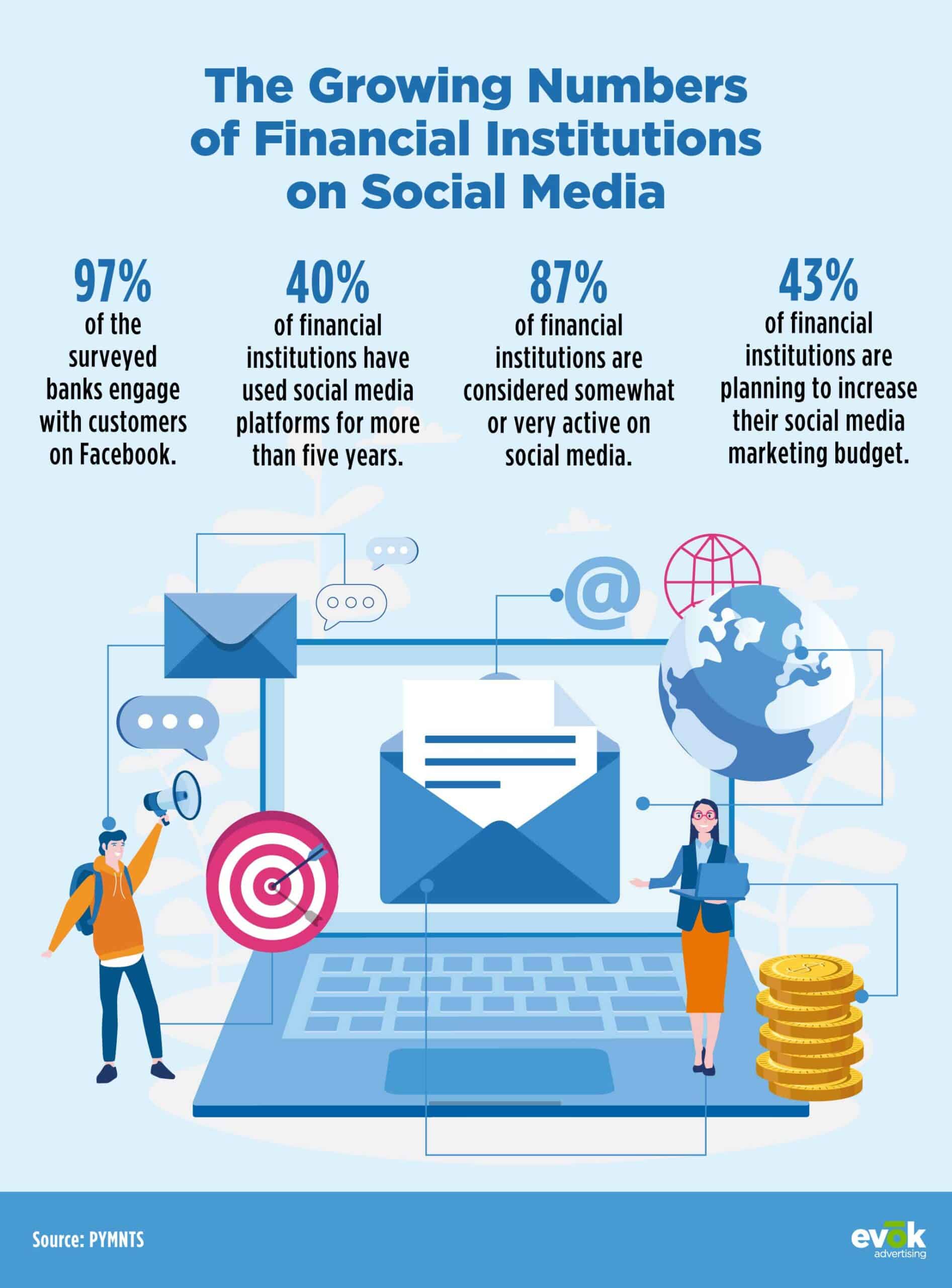 How Well Do You Know Your Audience?The first question you should ask yourself before restrategizing your social media presence is, "Who is my credit union's audience, and how well do I know them?" Without the answer, increasing your engagement rates is like taking a shot in the dark. The more you're aware of the wants and needs of your audience, the more likely you can increase your engagement. Let's say your credit union's goal is to drive more HELOC loans. Then the first step is to identify who your audience is and find out what messaging best resonates with them. That being said, each goal will entail different content based on your audience demographics, and your strategy should reflect the segment you're trying to reach. That's where tailored content can make your audience feel heard and understood, ultimately leading to higher engagement and brand trust. Offer Expert InsightsWhen it comes to creating content that converts, the next question to ask yourself is what does your social media offer that benefits the audience? For users to hit the follow button and engage with your posts, you must provide value to their social media feeds. Fifty-three percent of Americans reported having financial stress, with those between 18-34 having the highest levels (63 percent). This calls for more financial literacy from the experts, and your audience may be looking at your credit union for the answers. As an expert in financial topics, your credit union has an opportunity to use this platform to educate social media users on the ins and outs of banking through every stage of life. Small tips or shareworthy statistics every week can be enough to relieve your audience of financial stress, even if it's just a little. Consider creating a series like Tip Tuesday or Stat Saturday to engage your audience and encourage them to share their thoughts, too. Share the Local Love A unique selling point for credit unions is their rooted mission to serve their communities. Sharing this aspect of your financial institution and what it stands for can help humanize your presence and mend a form of disconnect with your audience. Followers want to feel close with their credit union, and localized content can help them view you as a friendly neighbor instead of a nationwide corporation. But how can credit unions share the local love while increasing engagement? It takes more than just sharing a photo of your team setting up a booth at a local event–it gets your followers involved with questions and incentives. So, instead of just sharing photo evidence of community work, invite your followers to join. Whether your credit union partners with a local shop to share freebies to followers who share your post or ask followers which nonprofits they want to see you work with next, it helps your audience feel included instead of sitting on the sidelines. Create a Video Series CampaignVideo content rules the internet. So much that the average person watches 100 minutes of video content per day, and 49 percent of consumers engage with branded video content on Facebook – double than any other social platform. Simply put, video content is a must in every social media strategy. Credit unions have an excellent opportunity to use video content to break down complex ideas, including their products and services. This doesn't mean you should use video content to sell your brand; instead, to help inform. Take our client Florida Credit Union, for example. They looked to our agency for help in creating informational video content that shares the ins and outs of their products and services. From how to apply for an auto loan to what a commercial loan can do for your business, these 3-5 minute videos are eyecatching and give a quick rundown on a financial topic, all while maintaining an on-brand look and feel. Keeping Your Social Media Content FreshKeep your content fresh with monthly or quarterly promotions and remember to incorporate proper usage of hashtags, location tags and mentions. Another great way to find tactics that drive engagement is to hop over to a competitor's social to see what works or flops for them. This can help spark some great ideas and help you share content that your audience is interested in. But if you need more quick tips or ideas, check out this list for some inspiration:
Not sure where to start? Partnering with an ad agency to help boost your social media presence is a great way to understand your audience and reach them. Give us a call to find out how we use analytical tools and marketing insights to capture the right audience, drive engagements and increase conversions for our credit union clients. The post 3 Effective Ways Credit Unions Can Grow Engagement on Social Media first appeared on Evok Advertising. |
| You are subscribed to email updates from Evok Advertising. To stop receiving these emails, you may unsubscribe now. | Email delivery powered by Google |
| Google, 1600 Amphitheatre Parkway, Mountain View, CA 94043, United States | |


No comments:
Post a Comment