One afternoon, during Samuel Hill's junior year at the Mississippi School for Math and Science, his parents told him that they wouldn't be contributing to his college fund. While such news might have been devastating to some high school students, Hill took it with grace.
One afternoon, during Samuel Hill's junior year...his parents told him that they wouldn't be contributing to his college fund.
"It was not out of malice," he explains with a smile. "They knew my potential to succeed. They knew that I was a hard worker and could pay my college expenses. That would allow them to avoid a financial situation that would harm my three younger siblings."
His parents' faith was not unfounded. Hill is now a college freshman at the University of Southern Mississippi, thanks in part to the Amazon Future Engineer Scholarship program. In addition to an internship with Amazon, he'll be awarded up to $40,000 over four years.
Recently, Hill took a few minutes away from his studies to discuss the struggle of scholarship hunting and the joy of earning a life-changing opportunity. He also shared a bold idea aimed at helping his community.
EdSurge: Why did you apply for the Amazon Future Engineer scholarship?
Hill: My search wasn't going too well. I had only received two other scholarships when my mom said, "Hey, there is this $40,000 scholarship that perfectly fits you. I think you could do it."
I was skeptical. I thought, "This is one of those big scholarships that only a handful of people get. What makes me special in any sort of way?"
Samuel Hill
But I was reading my resume and realizing, "Wow, I've done a lot of stuff." I participated in a lot of computer science activities before college. I was a counselor and student teacher at a cybersecurity camp. I worked at a local STEM-based organization that helped kids get firsthand experience. I started thinking maybe I could do it.
I went to my English teacher every single day for around two hours. We would review my resume and my essays for the scholarship. It was very hard to be happy with my application, but I submitted it anyway.
In April or May, I was starting to worry when I was called into the office by the administration. I thought, "Oh no, what did I do? I don't think I did anything!" I walked into the room, and I saw all the administration—and an Amazon box. It was the award letter for the scholarship!
100 computer science students from underserved communities received a $40,000 scholarship in 2021.
What does that award mean for you?
It is the most relieving sense of freedom. My college is fully paid for, and I won't be a financial burden to my parents. Now, my siblings can be okay, too, even if they don't get any scholarships.
It's a great opportunity, and it just takes a little bit of time and effort. It completely changed my life.
When I told my mom, she was in disbelief. That was one of my proudest moments. My dad just kept smiling. It was really cool to experience that.
In your application, you mentioned starting a cybersecurity academy. What's that about?
I'm really excited about that! One of the application questions was, "If your budget was limitless, what would you create?" I thought, "What is missing in Mississippi that would benefit the generations beyond me? What would send Mississippi in a different direction than where we're going now?"
My answer was a cybersecurity academy. Why not expose the younger generation to cybersecurity and start a new industry within Mississippi? That would create so many more job options in STEM and computing for the residents of Mississippi.
Right now, we are last in nearly everything: education, healthcare, health levels. It's really bad. People I know say, "Man, I can't wait to get out of Mississippi." "Well, why?" "Because there's nothing to do here. There are no opportunities." "Well, it's not going to change if you leave." Since no one else wants to do it, I'll do it.
That's my thought process: Start a new industry within Mississippi that will make it a better place to live. Once we have that new stream of income, we can start making the changes that we really need to see here. We can start funding more schools and raising those brilliant minds in the classroom so they're not hurting and feeling that their only option is to work at the chicken farm across the street. Show them that they can be engineers. They can be astronauts. They can pilot that spaceship that they always wanted to be in. There are some really bright kids here who lack exposure. I think a cybersecurity academy would really bring them out.
What plans do you have for your own future—academic or professional?
Amazon believes that supporting underserved students in their computer science education is imperative to building a diverse tech industry and future.
Amazon Future Engineer Scholars receive a $40,000 scholarship and a guaranteed paid summer internship programming at Amazon.
Applications are open now and close January 25, 2022.
Applicants must be high school seniors currently or previously enrolled in computer science-related coursework.
I actually changed my major recently. I was just a broad computer science major originally, but since coming here and meeting some of the faculty and getting counseling about my strengths and interests, I've switched to cybersecurity. I'll get certified along the way. The curriculum integrates all the certification tests I need to take.
To be honest, I don't really know what I'll do long-term, but I do have some things in place once I get out of college. This summer, I have the Amazon internship. Starting next year, I'll be an intern for the FBI. Whether that means I'll be a full-time agent once I get out of college or something else is up in the air. I might want to keep working for Amazon and really honing my skills for cybersecurity.
I just know that I want to be prepared for the opportunity to start building this cybersecurity academy and bringing STEM into Mississippi. I will do everything in my power to be ready for that.
Any parting advice for aspiring Amazon Future Engineer scholars?
I would tell other students to really try; you don't know what to expect when going into it. I didn't have the highest expectations for myself starting out. And that confidence slowly grew over time.
I was lucky because I had really good role models who encouraged me. But to the people who don't have that, you can do it—just have full confidence in yourself. I know I personally struggle with that. You're well worth the value. It's a great opportunity, and it just takes a little bit of time and effort. It completely changed my life.
Covid-19 cases are up in most New England states, according to data compiled by NBC News, driven mostly by the spread of the delta variant among unvaccinated people. The situation is particularly striking in Vermont and New Hampshire, which have had two of the largest increases among states in the past two weeks.
Let it be known, we're not fans of most of Nikon's kit lenses. But the Nikon 40mm f2 Z should replace every single one of them. First off, it's just under $300. It's small, has beautiful image quality, impressive weather sealing, and the performance you'd want from a lens like this. And even if it isn't a kit lens, there's good reason to buy into the Nikon system just for this lens alone. Combine this with the promising firmware updates Nikon has made to improve their autofocus, and the Nikon Z system is finally starting to spread its wings.
"Safety is the number one priority when shooting and I always leave it up to the athlete if they want to do the jump or not," Photographer Ben Franke tells us about photographing parkour. Ben, like many other photographers, loves his Leica. His work is proof that the decisive moment isn't just limited to the M-series. But there's a whole backstory to how Ben gets his shots. And as he tells us, there can be a long time between getting the location just right and the shoot.
We're very excited to bring you this week's episode of Inside The Photographer's Mind. On this occasion, we're blessed by the presence of our very own Reviews Writer, Brittany Smith. She joined The Phoblographer six months ago, and since then, she's been contributing top-level quality reviews of the latest gear and accessories in the photo industry. Naturally, we discuss gear, but we also delve into how brands are dropping the ball on inclusivity. Take a look at what's in store.
The goal of every photographer is to pair down their kit. For years, we've recommended prime lenses. And for simplicity, we often stick to primes. But zoom lenses like those made by Tamron have been stellar in the past few years. And if you only wanted one lens for portrait photography, you'd need to think carefully about what you'd pick. Recently, we tested two that are truly stellar. And one of them is genuinely bound to amaze portrait photographers everywhere that want one lens for portrait photography.
The Tamron lens deals are here! For the past few years, Tamron has become one of our favorite third-party lens manufacturers. Their lenses are fast to focus, compact, lightweight, and built incredibly well. On Sony cameras, they’re incredibly durable if not some of the most durable out there. After the jump, you can find all
For those looking for fantastic spa resorts in Florida or another relaxing getaway, here are the best wellness retreats in Florida for your next vacation.
“The universe makes a sound — is a sound. In the core of this sound there's a silence, a silence that creates that sound, which is not its opposite, but its inseparable soul… Silence is a flower, it opens up, dilates, extends its texture, can grow, mutate… It can watch other flowers grow and become what they are.”
"When you realize you are mortal you also realize the tremendousness of the future. You fall in love with a Time you will never perceive," the polymathic poet, painter, novelist, and philosopher Etel Adnan (February 24, 1925–November 14, 2021) wrote at the foot of a mountain she saw as a lens on the meaning of life.
Half a century later and a landmass over, as dawn was silvering the clouds of the Parisian night, she slipped out of the mortal and into the timeless, less than 1000 days shy of having lived 100 years. (No amount of life is enough life, and any amount of life is enough life — as with love.)
Adnan’s uncommon reckoning with mortality and the meaning lives on his her final book, Shifting the Silence (public library) — a lucid and luminous stream-of-consciousness outpouring of insight into the nature of existence, an inquiry into what gives meaning to our mortal lives, partway between poetry and philosophy, between requiem and redemption, between Gertrude Stein’s meditation on belonging in a love letter to Paris and Patti Smith’s meditation on dreams in a love letter to time. What emerges is the wakeful work, a life’s work, of naming what is — the ultimate Is beyond the explanations that masquerade as meaning yet containing the ultimate meaning.
When we name things simply, with words preceding their meaning, a cosmic narration takes place. Does the discovery of origins remove the dust? The horizon's shimmering slows down all other perceptions. It reminds me of a childhood of emptiness which seems to have taken me near the beginnings of space and time.
[…]
Word-languages are a trap… They created chaos and made us sink in incoherence… Our words don't suit prophecies anymore. That power is left to other species: to oak trees, for example, to the tides, which through their restlessness carry a phosphorescence we're not equipped to hear.
From the fortunate, ramshackle dock of her nine decades — having lived through the splitting of the atom and the Moon landing, through the rise and fall of the Iron Curtain, through a civil war that savaged her homeland and a world war that savaged our civilization, through the heyday Picasso and particle physics and Plath — she observes:
My favorite time is in time's other side, its other identity, the kind that collapses and sometimes reappears, and sometimes doesn't. The one that looks like marshmallows, pomegranates, and stranger things, before returning to its kind of abstraction… Today I see eternity everywhere. I had yesterday an empty glass of champagne on the table, and it looked both infinite and eternal.
Writing in the final season of her life, while around her a record heatwave is swarming Paris and wildfires are ravaging the Californian landscapes of her prime and her paintings, Adnan wonders whether this might be the final season of civilization, of the world itself as we know it, wonders whether we can “keep that strange sense of sacredness that we knew, as if by inheritance, in our old days.” She paces the periphery of Paris one timeless step at a time, watches the fog turn the Eiffel Tower into “a faint mark on pure space,” marvels at the magnolia in her garden “thriving in this non-tropical country,” marvels at the first image of an enormous frozen lake newly discovered on Mars and its “pinkish land covered with ice,” savors “the night's different shades, its infinite richness,” reads a book of poems written by an artificial intelligence and ponders the meaning of reality, the meaning of intelligence. Her mind wanders to the physics of tides, to the Trojan War, to the epoch-making spacecraft that has just landed on the dark side of the Moon, to Picasso’s late erotic etchings of women, to the burning mountain she once lived in and loved with the fire of life. Her wandering mind observes itself:
I am in the midst of whatever I am thinking of. There are fires in California, they have returned. I am burning. Am one of the trees that's disappearing in the fires. My body black and grey becoming ashes.
And yet there is something else beyond the cinder of the thinking-mind, some vaster consciousness in which the crests and troughs of being and not-being merge into the continuous sine wave of what is, ruffling the oceanic surface of timelessness:
I need to simplify my thinking: to come to the roots of the olive trees I have planted on my island, sit close to them, look at every leaf. Start early in the morning. Then close my eyes and let the morning sun touch my face. Go to the Mediterranean at the street corner, go into its water, its salt, its acid colors, its heat… stop thinking… just be, and for many hours in a row, merge with this vegetal and metallic kind of consciousness which is so overpowering.
A philosopher-friend comes to visit, one of those visits that “lift the sky,” and they talk about “the necessity of an urgent shift of destiny away from the cycle of the eternal return of the same, beyond whatever already is.” A poet-friend dies. “Dear San Francisco, cry for him.” Invoking another friend’s long-ago death that she still carries, and folding into it the incomprehensible awareness of her own mortality — as we invariably do in apprehending another’s — she reflects:
Being, or not being, cannot be dealt with with thinking, but are matters of experience, experienced often in murky waters… Their intensity creates waves that invade us, that leave us stunned. There's no resolution to somebody's final absence.
Another friend vanishes into the fog of mental illness, leaving Adnan to contemplate the discomposing dialogue between neurochemistry and identity:
To witness a mind go wild, like the California fires right now, is the hardest thing one can experience. And still, we do. The mind gets so fluid that you can't stop it with your will, you watch the will's annihilation. The question arises: are we just a series of chemical reactions? If we were courageous enough we would say yes, we are. But there is something in those chemical reactions that make us reject the acknowledgment of their own nature. We're body and soul, we say, let's accept this myth. Plato did it.
Even our ordinary minds, she observes, are too often befuddled by their own mindless activity, the thoughts of which we presume to be the authors — but as any neuroscientist and any longtime meditator can attest, this too is part of the dream of selfhood, the dream by which we flee from the reality that we are each a passing flicker in the consciousness of time and matter.
With an eye to her own experience of “double thinking” — something all of us have experienced in one form or another — she writes:
One thought sliding on another, was startled, didn't know which one to follow, lost sight of both… Are thoughts bouncing balls? Do we really own them?
She talks to herself, talks to the universe, talks to no one in particular — and then — in a handful of arresting cascades in this stream of consciousness, she talks to you, talks to me, with ravishing intimacy. “I am talking to you because I need you, and to need means to love.” She is talking to us, too, because she has something to impart, the way an oracle does. (Living a century with unrelenting wakefulness to life renders anyone an oracle.)
You know, sunsets are violently beautiful, I would say that they are so by definition, but there are lights, not even colorful in the habitual sense, lights elemental, mercurial, silvery, sulfurous, copper-made, that make us stop, then lose balance, make us open our arms not knowing what else to do, arrest us as if struck by lightning, a soft lightning, a welcome one. I wait for those lights, I know some of you do too, wherever you are, I mean when you are standing by an ocean, alone, within the calmness of your spirit. Be planetary.
To be planetary, she intimates, is to recognize that we are completely together and completely alone all at once, a murmuration of solitudes hurting through space, out of time:
We're on a planet sustained by nothing, carried through pure space by a willful star made of fire and in constant ebullition. We're travelers covering traveling grounds. Going, always going.
The undertone of the book, of Adnan’s farewell message to the living, is the intimation that only in the stillness of silence can we begin to discern where we are going and why:
The universe makes a sound — is a sound. In the core of this sound there's a silence, a silence that creates that sound, which is not its opposite, but its inseparable soul. And this silence can also be heard.
This silence is the preparation of things to come, but is not free standing. It's rather the shadow of whatever is, which precedes or follows at will any element that presents itself to this world. Its favorite time is the night.
Half a lifetime after she explored the relationship between dreaming and creativity, Adnan returns to the strange kingdom of sleep and those untrammeled territories of the nocturnal mind beyond thought:
In silence, in the dark, the tides shine, get slippery, their fluidity turns them into a mirage. There's a persistent hum to the ocean that translates into a back-and-forth movement of our body. Walls disappear and new visual formations invade the imagination. One is not in usual dimensions. Sleep belongs to the past, and the hours too. Luminosity enmeshed with darkness makes us cross over new territories. You move into galaxies in a few seconds, space-time becomes just a game.
Thinking is dimmed when familiar forms of reality disappear. This is not a loss. Long periods of inner silence favor clearings, they let the light in, the flooding, the blinding, the bedazzlement. We need spaces for the reshuffling of new cards, need to be nowhere. Thinking doesn't always come from preceding thoughts: I suspect it's always being born, even when it seems related to the past.
What's left? This season of heat and wind, this dinner tonight, and these large bands of trembling waves of various shades of green that split my heart with their incredible beauty.
This is Adnan’s parting gift to this world, to us: the life-tested assurance that even when there is too much past and too little future, life is only ever lived day to day, for the living day is all we have — or what Muriel Rukeyser, another visionary of uncommon poetic insight into the nature of being, reverenced as “the living moment… this moment in which we touch life and all the energy of the past and future."
One such living day, finding herself “at the door of Time's immensity,” Adnan writes:
The day is blustery, one more day following an infinity of days. And this one on its way out, according to its fate. If everything is alive, this day is too, a life independent from mine, and still interdependent.
My hands are getting cold, a musician is playing Bach on a lute on television, and it fits: Bach's music is the needle of the cosmic balance.
This has taken me into the core of a silence that underlines the universe: underneath the mesh of sounds that never cease there's a strange phenomena, a counter-reality, the rolling of silent matter. Silence is a flower, it opens up, dilates, extends its texture, can grow, mutate, return on its steps. It can watch other flowers grow and become what they are… Silence is the creation of space… Silence demands the nature of night, even in full day, it demands shadows.
But in all my wanderings I never forgot the light.
Radiating from these pages is at once a welcome and a parting — an invitation to the banquet of life at the deathbed of one particular human who will never again recur as that particular ripple in the consciousness of time but who once lived a long, wide, deep life fully awake to the ephemeral ecstasy of aliveness:
I have invited to my banquet you and your neighbor, and animals too, and stones and mountains, rivers will bring their floods. I will tell you history is made of wars, of ideas, of misery, of glory preceding misery. History is made of everything that has ever happened, the whole trajectory of humans, of dirt and galaxies. You are History, the squirrel is History, the Universe is History. It includes God too.
For a decade and half, I have been spending hundreds of hours and thousands of dollars each month composing The Marginalian (which bore the unbearable name Brain Pickings for its first fifteen years). It has remained free and ad-free and alive thanks to patronage from readers. I have no staff, no interns, no assistant — a thoroughly one-woman labor of love that is also my life and my livelihood. If this labor makes your own life more livable in any way, please consider lending a helping hand with a donation. Your support makes all the difference.
newsletter
The Marginalian has a free weekly newsletter. It comes out on Sundays and offers the week's most inspiring reading. Here's what to expect. Like? Sign up.
It might be easy to think that the handsome, successful actor Justin Baldoni doesn't have a worry in the world when it comes to his physical and mental health: think again.
You can't begin to design an effective learning solution until you've determined the effect it must have. Needs analysis is essential, but it's often just touched on or skipped completely. How can you embed this vital process in your organization?
Gamification for learning is a process that uses game mechanics to enhance learning. This article discusses strategies and examples of how it's done effectively.
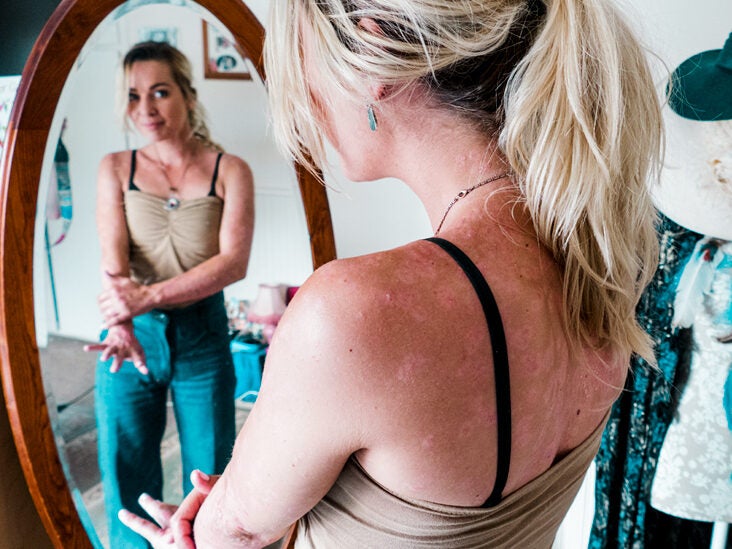
Psoriasis may not have a cure, but there are many things you can do to manage the severity and frequency of flare-ups. READ ON
What we're reading around the web
9 tips for keeping up with psoriasis treatments Staying up to date on the newest psoriasis treatments can be hard. Healthgrades offers nine easy ways to make sure you're getting the best care for your skin.
Chemo for psoriasis? Doctors have tested the use of chemotherapy drugs to treat psoriasis, Medical News Today reports. While some people have had success, the drugs have side effects.
If you've heard that boiling lemons can cure a variety of ailments, you're not alone. This article explores the benefits and downsides of boiled lemon water. READ ON
Forgetful? Having a hard time focusing? It's not just you — the fibro fog is real. These medications, supplements, and other treatments might help. READ ON
Take this quiz to find out if you're already well informed about dry eyes or if you need to meet with your eye doctor to learn more or go over treatment options. READ ON
The Austrian government has put unvaccinated people into lockdown to slow the spread of COVID-19. That means that roughly 2 million of its population of 9 million can now only leave their homes for limited reasons, which include commuting to work and shopping for essential items, reported Reuters.
The Latest on COVID-19
Updated on November 15, 2021 at 1:45 p.m. PDT
The Austrian government has put unvaccinated people into lockdown to slow the spread of COVID-19. That means that roughly 2 million of its population of 9 million can now only leave their homes for limited reasons, which include commuting to work and shopping for essential items, reported Reuters.
The Oklahoma National Guard released a memo saying that their guardsmen won't be required to get the COVID-19 vaccine. A Pentagon representative said they'll respond to the governor "appropriately."
People over the age of 40 in the U.K. are now eligible for COVID-19 booster shots, according to CNBC. In the U.S., boosters have been authorized for certain groups, including those over 65, those at high risk for infection, and those who received the Johnson & Johnson vaccine. Some states, including California and Colorado, are allowing adults over 18 to get a booster.
In order to help people with COVID-19, the University of Pennsylvania Health System introduced remote watching to assist the emergency departments (ED) in helping patients with COVID-19.
Start planning now — by breaking down big jobs into more manageable tasks and asking for help, you can create a festive space while conserving your energy.
Start planning now — by breaking down big jobs into more manageable tasks and asking for help, you can create a festive space while conserving your energy.
Zoner Photo Studio X is a powerful and affordable editing suite that doesn't get the attention it deserves. Now they have improved the speed of the Develop module along with some other new features, increasing its viability as an all-in-one post-production and digital asset management tool.
If you've ever thought about getting into astrophotography, you may have been dissuaded by the task of correctly processing your own images. There are countless guides online using a variety of programs, but they are either expensive and difficult to use, or are only available for a single operating system.
New gear is always exciting and can have a meaningful impact on the technical quality of your images, but those prices can add up quickly. Besides, there is a lot we can do to improve the quality of our photos with the gear we already own, and this fantastic video tutorial will show you many different ways to do so.
Russia confirmed Tuesday that it conducted a missile test targeting an old space satellite, but rejected accusations from the United States and allies that it risked endangering astronauts aboard the International Space Station.


 WordPress.com



























































No comments:
Post a Comment